
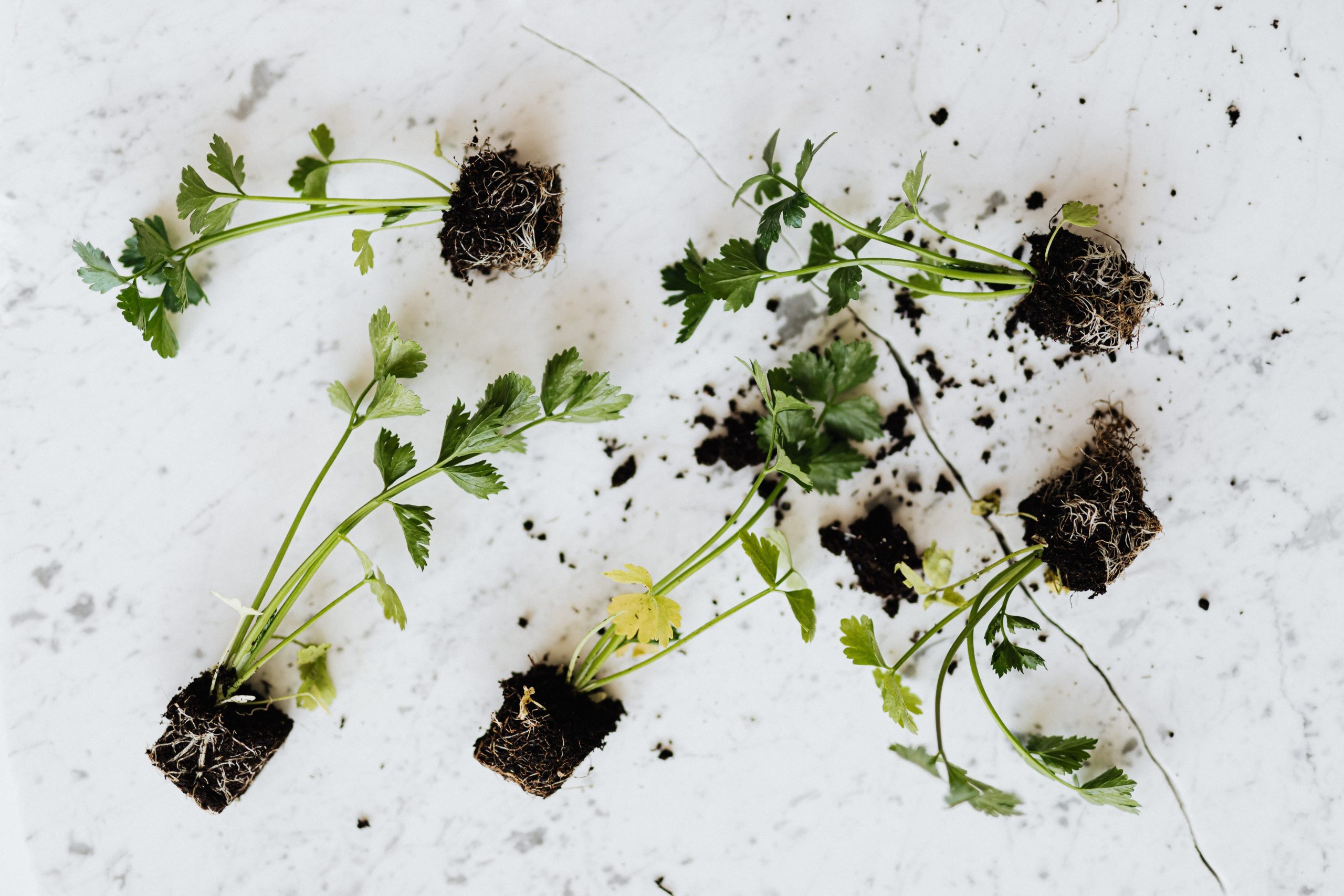
With the exception of growers that produce roots crops (potato, beetroot, carrots, onions and the like), 99% of Greenhouse farmers grow crops that produce an income from the leaves, flowers or fruit. Understandably, one therefore spends all or most energy looking at the above ground portion of the plants, since this is where the income is.
The greenhouse producer has to start thinking of plants as organisms that have a limited amount of energy available for use (growth) due to various growth factors such as climate, health, nutrition, plant age etc. This energy is then partitioned off to various parts of the plant, again depending on factors like where the plant “needs” it.
Fruit farmers want much of the energy to be proportioned to the reproductive parts of the plant, or if the saleable parts are leaves, to that, and not pushed into flowers and fruit. This is the plant balance that is often referred to. The roots play a pivotal role in the expression of this factor, and one can to a large degree control this by understanding and by ‘manipulation’.
Often, the roots are neglected and not fully understood what important role it plays in a plant. In basic terms, it can be explained as root mass = potential rate of absorption and storage (water and nutrients) while leaf mass and leaf area = potential rate of photosynthesis. Growth or poor production, resistance or susceptibility, reproduction or abortion rate, could all therefore in a way be linked to the root system. This is where it starts!
Roots are, with the exception of infinitely small amounts of nutrient intake through leaves, the plants pathway for nutrient and water intake, similar to its leaves with photosynthesis — a system of converting sunlight into energy rich carbohydrates. The two are inexorably connected. The one cannot function without the other. While it is the leaves that bind energy for growth, the roots harvest nutrients and also store metabolic building blocks for use in growth.

Functions of the root system:
Even casual consideration of the roots’ functions indicates that physiologically vigorous root systems are as essential as vigorous shoots for successful plant growth. It must be obvious that root and shoot growth is so interdependent that one cannot succeed without the other. Management of the roots is important because it affects the pathway and resistance to water and solute movement, while the extent of root systems affects the volume of soil available as a source of water and mineral nutrients.
The functions of roots include anchorage, the absorption of water and mineral nutrients and synthesis of various essential compounds such as growth regulators.
Anchorage:
The role of roots in anchorage often is taken for granted, but it actually is very important because the success of most land plants depends on their ability to stand upright and “stay put”. The strong anchor roots keep the root system stable so that movement (e.g. in the wind) will not damage the very fine hair roots.
Absorption:
The obvious importance of healthy, effective, deep, wide spreading root systems for absorption of water and minerals cannot be overemphasised.
Synthesising Functions:
Root cells possess many of the functions of shoot cells and some aerial roots even produce functional chloroplasts. Essential compounds such as growth regulators (e.g. cytokines) are produced in the roots and sent upwards to shoots for critical processes like cell division.
Storage:
The root is the “Pantry” of the plant, storing water, carbohydrates and other minerals and nutrients, required by the stems and foliage at a later stage. It stands to reason that if this reserve is depleted, growth will not be able to be sustained.
Strong root system necessary:
A producer needs his plants to have strong root systems for the roots to take up as much nutrients, minerals and water as it requires for the foliage and fruit to grow optimally. Furthermore, a strong healthy root system is necessary for the plant to grow in size; the stronger the roots, the stronger the plant and the more production capacity the plant exhibits.
A few recommendations: Give the plant a good, well aerated anchorage with sufficient consistent soil moisture as well as a balanced diet of nutrients. The seedling must be carefully planted into the root-zone. We want this to be the growing place, not the final resting place of the plant. Incorrect and harsh transplanting causes poor soil contact or damaged roots (e.g. J-rooting), resulting in poor growth and the strong potential for disease infection.
First build the roots, then the plant. Do not expect sustained production from an early over utilised root system. A stressed plant (roots) may give an early flush of production (e.g. flowers and fruit), but hereafter the plant will be weak; production will be of poor quality and low volume. An example is the early and regular harvest of “baby” Swiss chard leaves. This results in a shortened plant lifespan and low total production since the roots were never allowed to fully develop and sustain a longer crop.
Ensure that the root zone is healthy: Prevent pathogens and Nematode attack by preventative treatment (including the use of genetic resistance) as well as the use of beneficial organisms and the feeding of the soil itself as a living breathing organism. If there are production problems, investigate all root limiting factors. Often the foliar disease is but a symptom of an unhappy root system!
Bear the roots in mind as a primary production and management objective. If they are healthy and properly cared for, they will bear an excellent crop. By P de Vries