
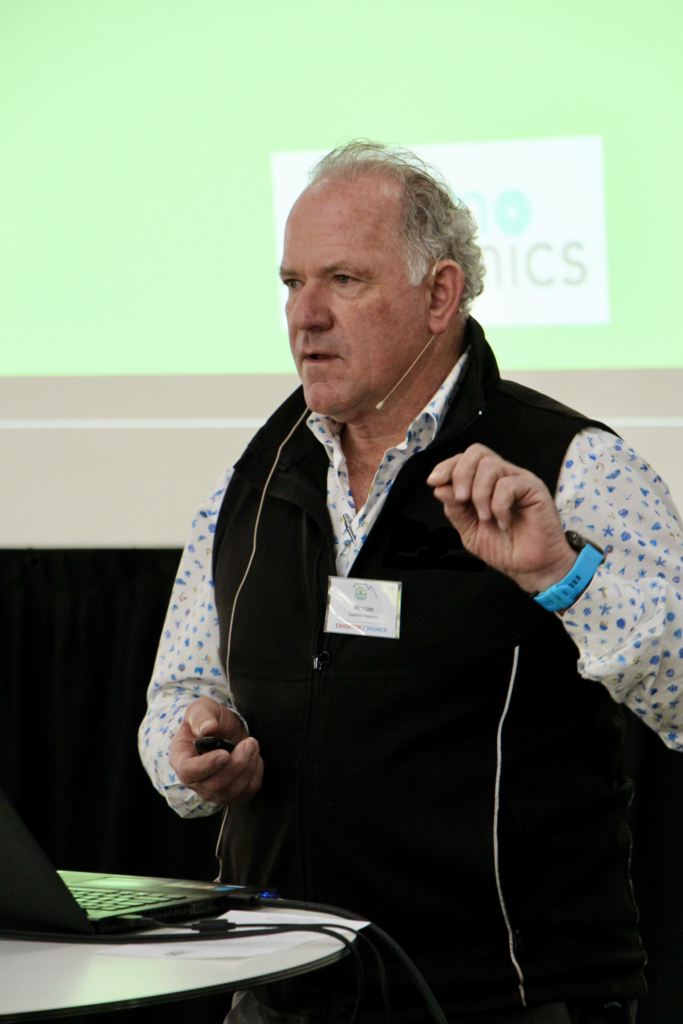
At the Gauteng Undercover Farming Conference & Expo, held on 25 and 26 March 2026 at the CSIR International Conference Centre in Brumeria, Pretoria, Nico Uys of Ezolimo Organics delivered a presentation that challenged one of the most common misconceptions in modern agriculture.
The topic was direct and timely:
Biostimulants, Biofertilisers and Biocontrols: Old vs New, Chemistry vs Biology, Conventional Inputs Versus Emerging Alternatives.
For many growers, these terms can sound like the language of a completely new farming movement. Yet Nico’s message was far more practical. Biological agriculture is not about rejecting everything farmers already know. It is not about abandoning chemistry, conventional inputs or proven production systems. It is about building a stronger future by improving the systems that already work.
He opened the discussion with a quote from Socrates: “The secret of change is to focus all of your energy not on fighting the old, but on building the new.” That idea shaped the entire presentation. In undercover farming, where precision, consistency and crop quality are critical, the future does not belong to farmers who simply choose “old” or “new.” It belongs to growers who know how to integrate the right tools at the right time.
That is where biostimulants, biofertilisers and biocontrols become especially valuable. They are not miracle products. They are also not disruptive replacements for conventional crop programmes. When properly understood and applied, they are practical biological tools that can help growers build stronger soil, healthier plants, better pest resilience and more efficient production systems.
Ezolimo Organics provides biological solutions that help farmers boost yields, improve soil health and protect crops sustainably, including biostimulants, biocontrols, fertilisers and soil rehabilitation liquids. The company’s approach fits closely with Nico’s message at the conference: biology should be used as part of an integrated farming strategy, not as a standalone ideology.
Why the Old vs New Debate Misses the Point
A central theme of Nico Uys’s presentation was that the common “chemistry versus biology” debate is flawed.
Agriculture is often spoken about as if farmers must choose one side. Biological products are sometimes presented as if they must replace conventional chemistry. Low-residue products are sometimes assumed to be less effective. Nature-inspired solutions are often labelled as disruptive, when in reality many of them are complementary.
This type of thinking creates an unnecessary divide. Farmers do not operate in a simple world. They deal with yield pressure, crop quality demands, pests, diseases, water scarcity, labour limitations, changing regulations and rising input costs. In that environment, no serious grower wants slogans. They want a stronger production system.
Nico made it clear that the most useful innovations are often those that work with what already exists. In undercover farming, this point is especially important. Greenhouse, tunnel and shade-net producers already rely on structured systems. They monitor irrigation, fertigation, humidity, temperature, pests, diseases and crop timing more closely than many open-field systems.
Biologicals fit naturally into this environment because undercover farmers already understand precision. The goal is not to throw away conventional systems. The goal is to make those systems stronger, more resilient and more sustainable over time.
Biological Farming Is Not as New as Many Think
Biostimulants, biofertilisers and biocontrols are often spoken about as “new technology,” but many biological principles have been used for centuries. The difference today is that the science, formulation quality, application knowledge and market demand have advanced.
The May/June 2026 edition of Undercover Farming Magazine reported on Nico’s presentation and explained that biopesticides, biofertilisers and biostimulants are experiencing strong global growth, driven by sustainability goals, eco-friendly farming practices, regulatory support and consumer demand. The sector is expanding at more than 10% CAGR (Compound Annual Growth Rate) is projected to exceed $20 billion by 2030.
Major companies such as Bayer, Syngenta and Corteva are active in this biologicals space, while agri-biotech startups are also contributing to new product development. Brazil remains one of the largest adopters of biologicals in agriculture.
This shows that biological farming is no longer a niche conversation. It has moved into mainstream agriculture because growers, retailers and consumers are all looking for stronger answers to the same pressures: sustainability, residue control, soil degradation, water limitations and long-term crop performance.
Understanding the Three Main Biological Categories
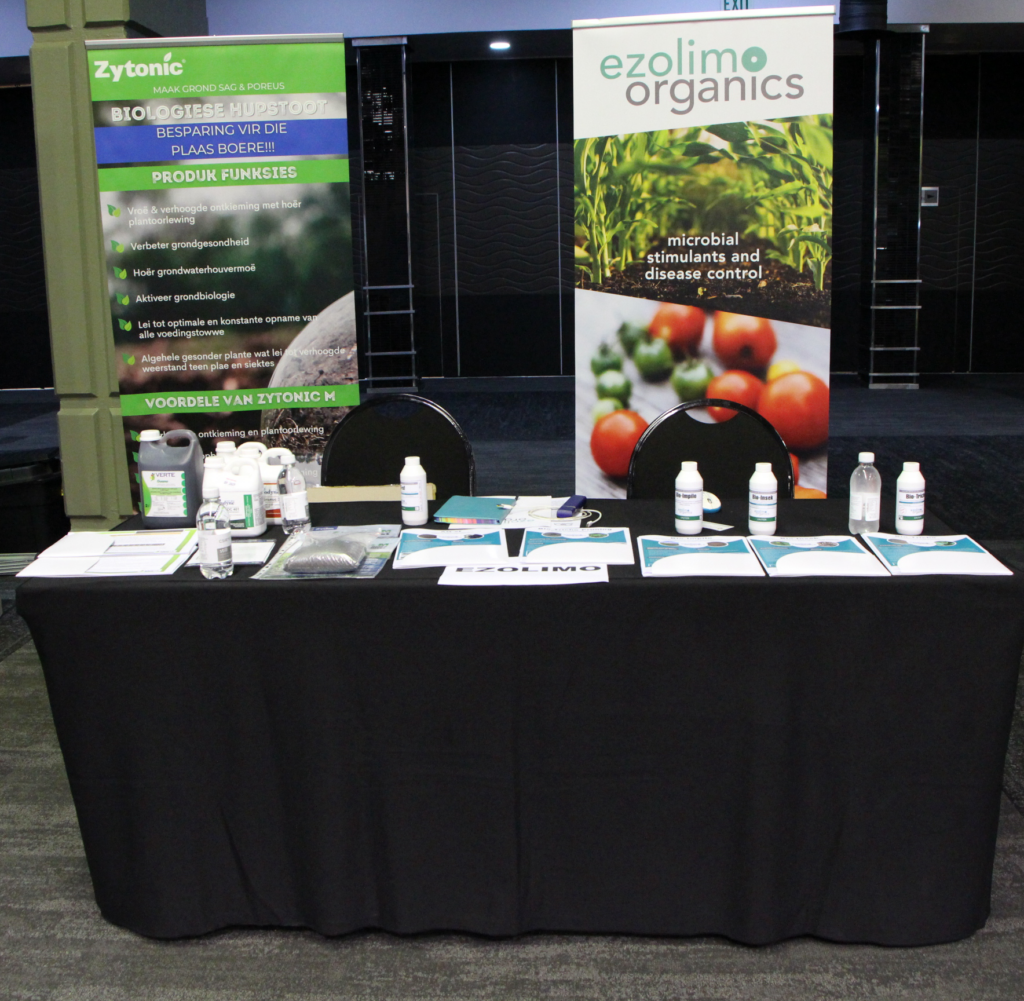
Nico’s presentation focused on three key groups: biopesticides, biofertilisers and biostimulants. Each group plays a different role, and each can contribute to a stronger undercover farming programme when used correctly.
Biopesticides: Supporting Pest Control Through Biology
Biopesticides use natural compounds, beneficial organisms or microbial activity to help manage pests. They can reduce pressure on conventional chemistry, support integrated pest management and help growers manage residues more carefully.
One of the examples highlighted was Bio-Neem, which contains azadirachtin from the neem tree, Azadirachta indica. Neem has been used for centuries and is one of the most recognised botanical pesticides worldwide. Azadirachtin works as an insect growth regulator, affecting moulting and weakening the next generation of insects.
This is an important distinction. Biological pest control is not always about immediate knockdown. In many cases, it supports stronger long-term pest suppression by interrupting life cycles, reducing reproduction and helping keep pest populations under control.
Another example was Xterminator, a pyrethrum-based product. Pyrethrum is derived from pulverised flowers, and its pyrethrins attack insect nervous systems and inhibit biting activity.
The presentation also discussed Bio-Insek, which uses two fungi: Beauveria bassiana and Metarhizium anisopliae. These organisms have long histories in biological pest management. Beauveria bassiana was discovered in 1835, while Metarhizium anisopliae was discovered in 1879.
However, Nico also stressed that biological control requires understanding. These fungi can dry out easily, have short activity in direct sunlight because of UV exposure, show low survival in low humidity and require careful monitoring.
This is where good advice matters. Biological products can be effective, but they must be handled correctly. Application timing, humidity, sunlight, crop stage and monitoring all affect the result. Used properly, they can form part of a stronger pest management strategy.
Biofertilisers: Making Nutrients More Available
Biofertilisers support the biological processes that make nutrients available to plants. This is particularly important in South African soils, where organic matter is often low and water-holding capacity can be a major limitation.
Nico’s presentation highlighted the reality of dry-climate South African soils, where the organic fraction is often around 1%. Ideal soils contain much higher organic matter. The UCF article explained that increasing soil carbon can have a major impact on water-holding capacity: 100 kg of soil at 1% carbon holds around 10 litres of water, while the same amount of soil at 2% carbon holds 40 litres, and at 5% carbon holds 200 litres.
For undercover farming, this is not just a soil-science detail. It is a practical production issue. Water scarcity is one of the most serious challenges facing South African growers. Any practice that helps improve soil carbon, soil biology and water retention can contribute to stronger crop resilience.
Nico’s presentation also referred to bacterial solutions that support nutrient availability, including nitrogen fixers, phosphate solubilisers, potassium mobilisers and organisms that help mobilise sulphur, magnesium, boron and silica.
This is a key point for growers. Nutrient management is not only about what is applied. It is about what becomes available to the plant. Biofertilisers help close that gap by supporting the biological activity needed for stronger nutrient uptake and utilisation.
Biostimulants: Improving Plant Function and Resilience
Biostimulants are used to support plant growth, stress tolerance, root activity, photosynthesis and crop quality. They are not traditional fertilisers, and they are not pesticides. Their value lies in helping the plant function better.
In Nico’s presentation, plant sugars, or Brix levels, were linked to healthier plant function. Higher Brix levels indicate better photosynthesis and healthier plants.
This matters because undercover farming is built around crop quality and consistency. A plant with stronger photosynthesis, better root development and improved stress tolerance is more likely to produce the kind of uniform, marketable crop that growers need.
The UCF article noted that Bio-Impilo stimulates growth, promotes root development, breaks down lignin and increases Brix in vines. It also highlighted Zytonic M, a mycorrhizal biofertiliser that can reduce chemical fertiliser needs by up to 50% from the first cycle while improving germination, drought resistance, produce quality and soil biological activity.
These are practical outcomes. A grower does not invest in biologicals because they sound modern. They invest because the right biological programme can help deliver stronger roots, better crop quality and a more balanced production system.
Soil Health Is the Foundation of Better Farming
Undercover farming is often associated with structures: greenhouses, shade nets, tunnels, irrigation systems and climate control. These are essential, but Nico’s presentation brought attention back to the root zone.
Soil health remains central.
A crop can only perform as well as its root environment allows. If soil biology is weak, nutrient cycling suffers. If organic matter is too low, water-holding capacity is limited. If microbial life is poor, plants may struggle to access nutrients efficiently. If roots are stressed, the whole crop becomes more vulnerable.
The presentation included the important idea that good biology overrides mineral imbalance. This does not mean mineral nutrition is unimportant. It means mineral nutrition works best when supported by active biology.
A fertiliser programme can supply nutrients, but biology helps make those nutrients useful. Microbes help cycle nutrients. Organic matter helps hold moisture. Root-zone activity supports plant uptake. A living soil system gives the crop a stronger foundation.
For undercover growers, this is especially important because intensive production can place heavy demand on the root zone. Crops are expected to perform consistently. Inputs are carefully managed. Disease and pest pressure must be controlled. Water use must be efficient.
Biology helps support that balance.
Trichoderma: Useful, Practical and Often Misunderstood
Trichoderma spp. was another important part of Nico’s presentation. It is commonly found in the root zone of plants and can act as a biological agent against disease. It can induce plant resistance, stimulate growth and help with disease suppression.
But Nico was also clear about its limitations.
Trichoderma needs carbon and moisture. It breaks down when exposed to sunlight. It can be killed by fungicides. Spraying in hot and low-humidity conditions is not beneficial for control.
That honesty is important. Biological farming must not be oversold. These products are not magic. They are living or biologically active tools, and living tools require the right conditions.
This is exactly why technical guidance matters. Farmers need to know when to apply a product, how it interacts with other inputs, what conditions support performance and what mistakes reduce effectiveness.
When managed properly, Trichoderma can contribute to stronger root-zone protection and healthier plant development. When applied incorrectly, the result can be disappointing. The difference is knowledge.
Water, Carbon and the South African Farming Reality
One of the most valuable parts of Nico’s message was the connection between soil carbon and water.
South African farmers understand water pressure better than most. In many regions, water scarcity is not a future concern. It is already part of daily planning. Undercover systems can help growers manage water more efficiently, but the soil or growing medium still plays a major role.
When soil carbon increases, water-holding capacity improves. That means the crop has access to moisture for longer periods, irrigation can be more efficient and plants are better supported during stress.
This makes biological farming a business issue, not only an environmental issue.
Growers who build stronger soil biology are also building better water resilience. They are giving their crops a better chance to handle heat, dry periods and nutrient pressure. They are making their production systems less fragile.
In undercover farming, where crop value is high and losses can be expensive, this kind of resilience is not optional. It is part of long-term profitability.
Why Brix Should Matter to Growers
Brix is often discussed in relation to fruit sweetness, but Nico’s presentation used it in a broader plant-health context. Higher Brix levels can indicate better photosynthesis and healthier plants.
For growers, this gives a useful window into plant function. If a plant is photosynthesising well, moving sugars efficiently and developing properly, it is generally in a better position to resist stress and produce quality crops.
This is where biostimulants can support a stronger crop response. They help improve the plant’s ability to grow, recover, root and function. In high-value undercover systems, even small improvements in plant performance can affect yield consistency and quality.
The point is not that Brix should replace other measurements. Rather, it should form part of a broader understanding of crop health. Alongside visual scouting, root inspection, soil testing, irrigation monitoring and pest checks, Brix can help growers see whether their biological programme is supporting plant performance.
Verte Guano and Local Organic Fertiliser Options
The UCF article also noted that Ezolimo Organics supplies local organic fertiliser options, including Verte Guano products. These include a registered liquid concentrate and slow-release tablets, backed by 26 years of farmer results.
This is important because biological farming must remain practical. Farmers need solutions that work in real programmes, with real crops and real production pressures. They need products that support soil activity, nutrient supply and crop performance without creating unnecessary complexity.
The Ezolimo presentation included a Verte Guano liquid analysis showing nutrients such as nitrogen, phosphorus, potassium, calcium, magnesium, manganese, iron, copper, zinc, boron, molybdenum, carbon and sulphur.
For undercover farmers, this reinforces the idea that biological programmes are not built on a single product. They are built through layers: soil support, microbial activity, pest management, root stimulation, nutrient availability and crop-specific advice.
That layered approach is what creates a stronger system over time.
Why Biologicals Fit Undercover Farming So Well
Undercover farming gives farmers more control, but it also increases the need for precision.
A protected structure can reduce exposure to harsh weather, but it can also create conditions where pests or diseases spread quickly if monitoring is weak. High-value crops need consistent growth. Retailers and markets expect quality, uniformity and residue compliance. Water and fertigation need to be managed carefully.
Biologicals fit this environment because they support the same goals: healthier plants, better root systems, improved resilience, reduced chemical pressure and more sustainable production.
The May/June 2026 UCF issue also highlighted the broader importance of undercover farming in South Africa, especially as farmers face heat, wind, water pressure, input costs and unpredictable seasons. Protected farming includes greenhouses, tunnels, shade-net systems, controlled irrigation, climate-smart structures and improved crop monitoring.
Biological tools fit naturally into this shift. They help growers move toward stronger production without forcing them to abandon existing systems.
Nico Uys’s Core Message: Integration Beats Replacement
If there is one idea that should stay with growers after Nico Uys’s presentation, it is this: biology is not a replacement product. It is an integrated solution for a better result.
That sentence matters because it removes the pressure to choose sides.
A farmer can still use conventional inputs where they are needed. A grower can still rely on chemistry when it is appropriate. But biologicals can help reduce dependency, improve soil function, support crop resilience and improve long-term sustainability.
This is not old versus new. It is old and new working together.
Nico helps clients with tailor-made solutions for their crops, which is exactly the right approach. A vineyard, vegetable tunnel, blueberry system, nursery operation and greenhouse crop will not all need the same biological programme. The crop, climate, soil, pest pressure and production goal must guide the recommendation.
That is how biological farming becomes practical. It becomes less about theory and more about stronger results.
Practical Lessons for South African Undercover Growers
The first lesson from Nico’s presentation is that biologicals should be treated as serious farming tools. They need correct timing, storage, application and monitoring.
The second lesson is that soil biology deserves more attention. Farmers often focus on fertiliser rates, but nutrient availability depends heavily on microbial activity, organic matter and root-zone health.
The third lesson is that pest management should become more integrated. Biocontrols can help reduce pressure, but they need the right environmental conditions and must be used as part of a broader strategy.
The fourth lesson is that water efficiency begins in the soil. Building carbon and organic matter can help create stronger water retention and better drought tolerance.
The fifth lesson is that crop health should be measured in more than one way. Brix, root growth, pest pressure, visual crop quality and soil tests all help build a clearer picture.
The final lesson is that biological farming is not a shortcut. It is a long-term strategy for farmers who want more resilient, more sustainable and more profitable systems.
The Future of Undercover Farming Is Biological Integration
South African agriculture is under pressure. Farmers are being asked to produce more with fewer resources, lower residues, higher quality and better environmental outcomes.
Undercover farming already gives growers an advantage by improving control. But structures alone are not enough. The biological life inside the system matters just as much.
Biostimulants, biofertilisers and biocontrols give farmers practical ways to improve that life. They can support stronger roots, more active soils, better nutrient uptake, healthier plants and more balanced pest management.
Nico Uys’s presentation showed that these tools should not be seen as a break from the past. They should be seen as the next layer of progress.
Modern farming does not need to fight the old. It needs to build the new on top of what already works.
Conclusion: Building Better Results Through Biology
The message from Ezolimo Organics at the Gauteng Undercover Farming Conference was clear, practical and timely.
Biological products are not disruptive replacements. They are complementary innovations. They work best when they are integrated into existing systems with technical understanding and crop-specific planning.
For undercover farmers, that means using biocontrols to support pest management, biofertilisers to improve nutrient availability and biostimulants to strengthen plant growth and stress tolerance. It means paying closer attention to soil carbon, root-zone biology, Brix levels and water-holding capacity.
Most importantly, it means building a stronger farming system from the ground up.
The choice is not chemistry or biology. It is not old or new. It is not conventional or sustainable.
The real choice is whether growers continue working in isolated categories, or whether they begin integrating the best available tools into systems that are more resilient, more productive and better prepared for the future.
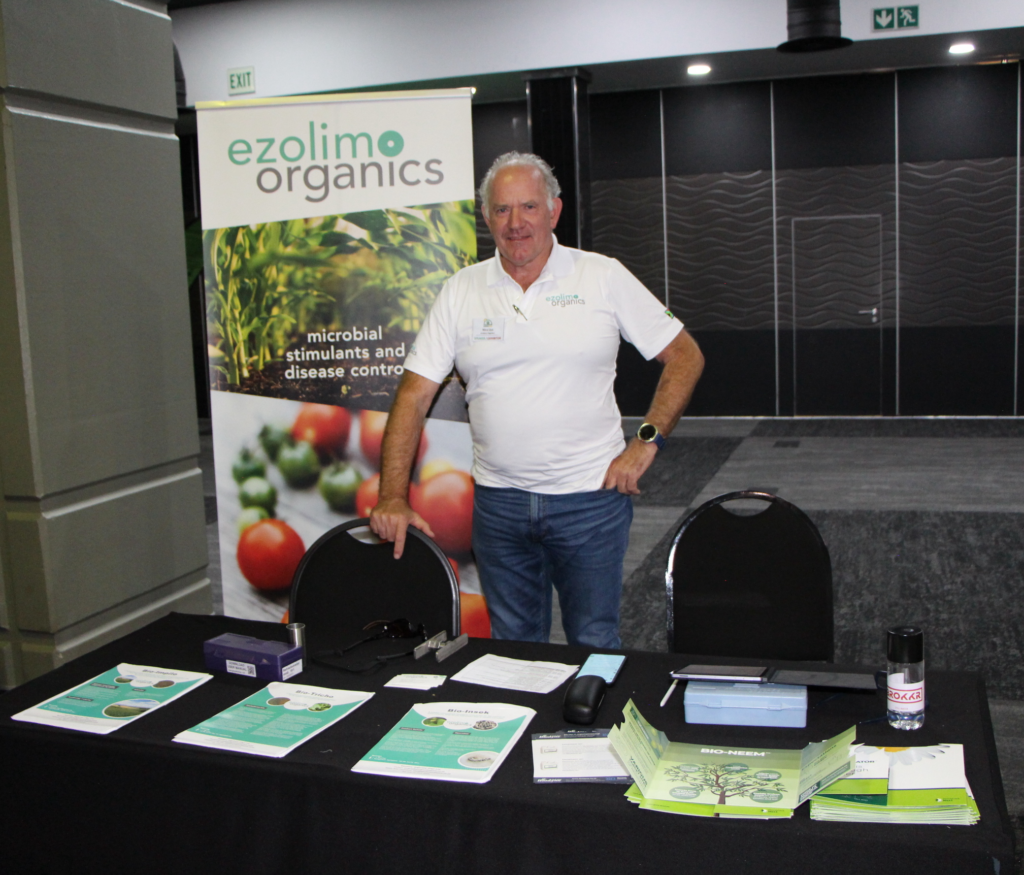
For more information on Ezolimo Organics products and tailor-made biological crop solutions, contact Nico Uys at nico@ezolimoorganics.co.za.
FAQ: Biostimulants, Biofertilisers and Biocontrols in Successful Undercover Farming
1. Are biological products meant to replace my current chemical programme?
No. That is one of the biggest misunderstandings around biological farming. Biological products should not be seen as a full replacement for conventional inputs. They are best used as part of an integrated crop programme.
For undercover farmers, this means using biology to support what already works. Biocontrols can help reduce pest pressure. Biofertilisers can improve nutrient availability. Biostimulants can support root growth, plant strength and stress tolerance. The goal is not to throw away chemistry. The goal is to build a stronger, more balanced production system.
2. Why should undercover farmers care so much about soil biology?
Because the crop can only perform as well as the root zone allows. Even in protected environments, soil health and root activity remain central to crop performance.
Good biology helps nutrients become more available to plants. It improves water-holding capacity, supports root development and helps crops handle stress more effectively. In South African conditions, where water pressure and input costs are serious challenges, stronger soil biology can make a real difference to production stability and long-term farm resilience.
3. Do biological products work as quickly as chemical products?
Not always, and they should not be judged in exactly the same way. Some biological products may show visible effects quickly, while others work by improving long-term plant health, root activity, soil function or pest balance.
For example, a biocontrol product may not always act like a chemical knockdown spray. It may work by disrupting pest development, reducing reproduction or helping keep populations under control over time. That is why monitoring, timing and correct application are so important. Biologicals work best when farmers understand how they fit into the full crop cycle.
4. What mistakes do farmers make when using biological products?
The most common mistake is treating biologicals like ordinary chemical inputs. Many biological products are sensitive to sunlight, heat, low humidity, fungicide residues or poor storage conditions.
For example, beneficial fungi need the right moisture and environmental conditions to survive and perform. Trichoderma needs carbon, moisture and protection from harsh conditions. If a farmer applies these products at the wrong time, in the wrong conditions, or mixes them with incompatible chemicals, the result may be disappointing.
Biological products are powerful tools, but they need proper handling and technical guidance.
5. How can biologicals help with water scarcity?
Biological farming can support better water efficiency by improving soil carbon, organic matter and root-zone activity. Healthier soils can hold more water and support stronger root systems.
This is especially important in South Africa, where dry conditions and limited water access affect many producers. When soil biology improves, plants often use water more efficiently and cope better with stress. For undercover farmers, this can support better crop consistency, especially in systems where irrigation and fertigation are already carefully managed.
6. What is the most important takeaway from Nico Uys’s presentation?
The most important takeaway is that biology is not a replacement product. It is an integrated solution for better results.
Farmers do not need to choose between old and new, chemistry and biology, or conventional and sustainable. The strongest farming systems use the best tools from both sides. Biostimulants, biofertilisers and biocontrols can help farmers build healthier crops, stronger soils, lower chemical pressure and more resilient undercover farming systems.
(M.O)