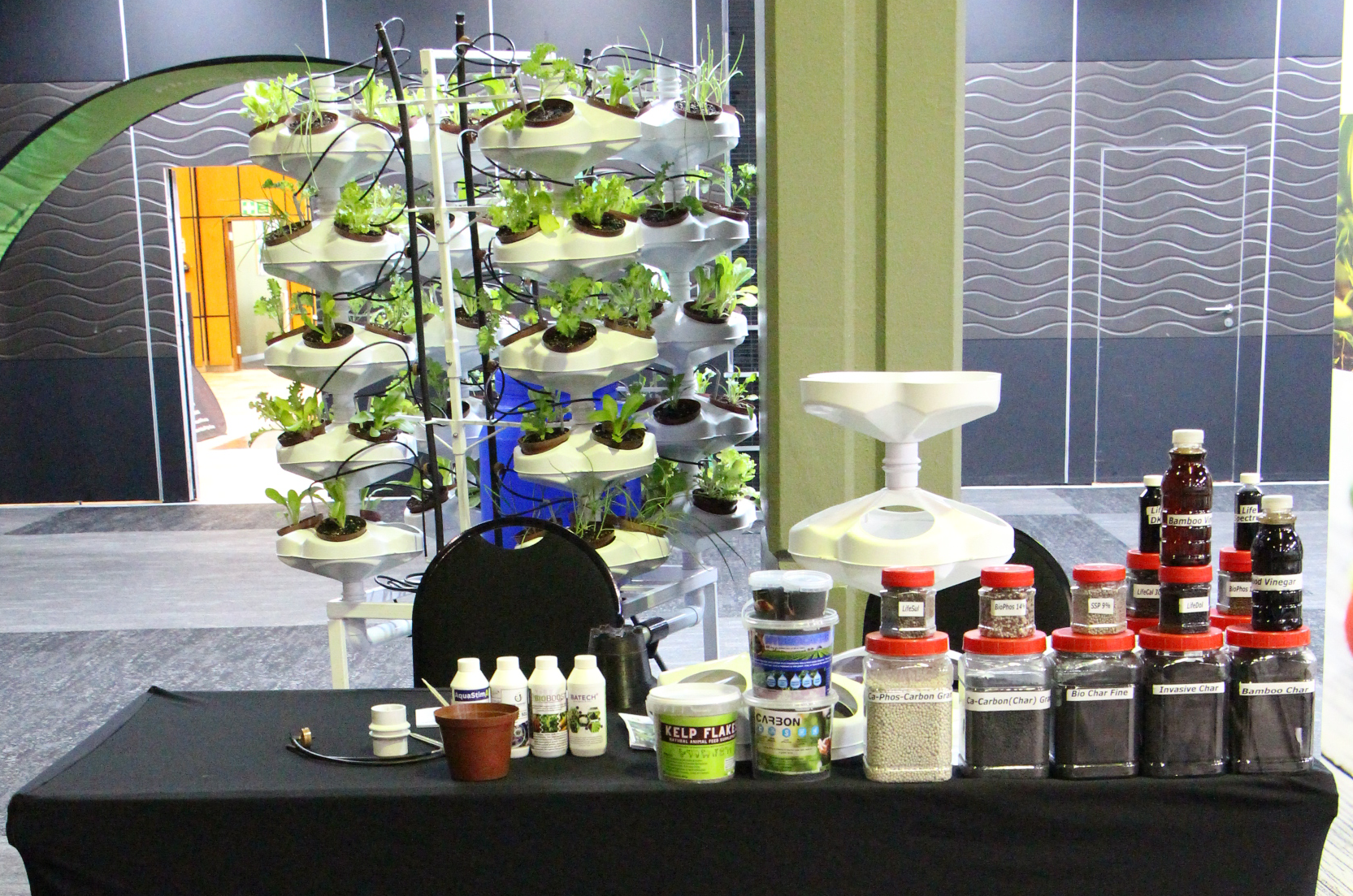
Vertical farming is becoming an important part of the conversation around food production, especially where space, labour and water must be managed carefully. The Vertipots Growing System speaks directly to that need. It is a hydroponic vertical farming system designed to maximise output while reducing the physical space, labour demands and resource use normally associated with traditional farming.
The idea is simple, but practical: grow upwards instead of outwards. By using a compact vertical structure, Vertipots allows crops to be produced in stacked layers within a smaller footprint. This makes the system suitable for areas where conventional field farming may not be practical, including urban environments, rooftops, the tops of buildings and even upper levels of parking garages.
At the heart of the system is an efficient approach to farming. Instead of relying on large areas of soil, heavy field preparation and labour-intensive maintenance, the system uses controlled containers, individual pots and a structured layout that makes planting, monitoring and harvesting easier.
The result is a cleaner, more efficient method of production that supports continuous crop cycles and better use of available space.
What Is the Vertipots Growing System?
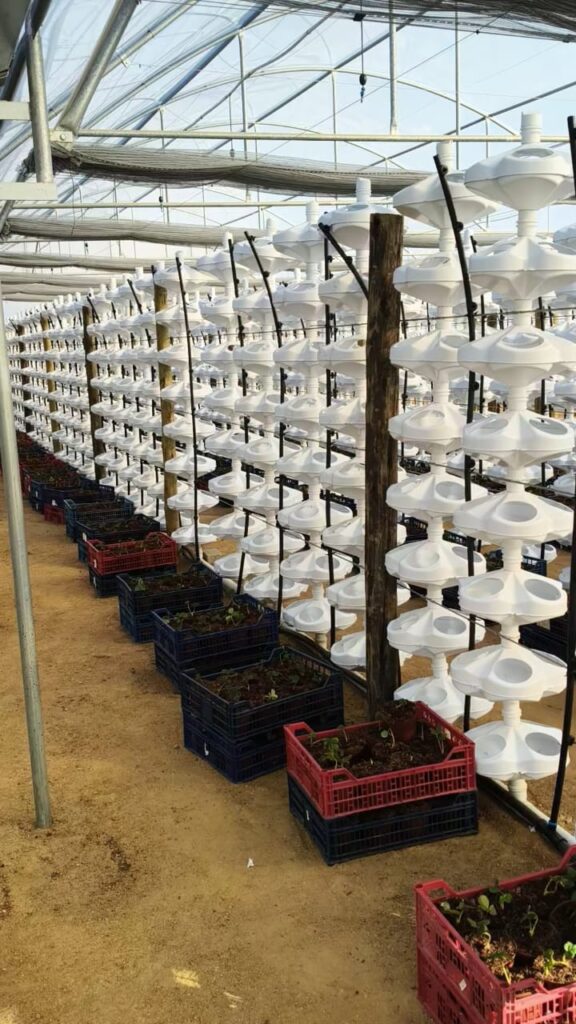
The Vertipots Growing System is a hydroponic vertical farming system built around a compact, upward-growing structure. Instead of crops being planted across a broad horizontal area, plants are placed in stacked layers, allowing production to take place within a much smaller footprint.
This structure is central to the system’s value. It allows growers to intensify production in areas where land may be limited, expensive or unsuitable for traditional cultivation. In practical terms, the system opens the door to production in locations that are not normally associated with farming.
Rooftops, building tops and parking garage levels are examples of spaces that can be used to bring food production closer to the people who consume it.
The system also fits naturally into under-cover farming. By growing crops under cover, produce remains cleaner and better protected from rain splash and external contaminants. Workers can also continue harvesting in rainy conditions, which supports more consistent operations.
Built Around Efficient Use of Space
One of the strongest advantages of the Vertipots Growing System is its space-saving design. In traditional farming, production depends heavily on available land area. In a vertical system, the same thinking changes. The growing area is intensified by stacking plants upwards, allowing the grower to use height as part of the production space.
Farming Upward in a Smaller Footprint
By growing plants vertically in stacked layers, Vertipots helps producers make better use of limited space. This is especially relevant in urban and peri-urban environments, where open land may be scarce or costly.
A small footprint can still support meaningful crop production when the system is designed to grow upwards.
This efficient use of space also creates flexibility. Farming does not have to be limited to conventional land. Spaces that would otherwise remain unused can become part of a food production strategy.
Bringing Production Closer to End Users
When food can be grown closer to end users, transport requirements can be reduced. The original article highlights this as one of the benefits of the system: production can move closer to urban consumers, helping deliver fresher produce while reducing the need to transport crops over longer distances.
This is a practical point. Freshness, time and logistics all matter in food production. An efficient growing system that can operate closer to demand gives growers another way to think about supply and distribution.
Water Management With Less Waste
Water efficiency is another major benefit of the Vertipots Growing System. Traditional field farming can involve significant water loss through runoff and uneven distribution. Vertipots is designed to deliver moisture directly to plant roots, helping reduce waste and manage water more carefully.
Moisture Delivered Where It Is Needed
Because plants are grown in controlled containers, water can be directed more precisely to the root zone. This is one of the reasons the system uses less water than traditional field farming.
Rather than watering a broad area of soil, the system focuses water use around the plant.
This makes the system more efficient in its use of moisture. Over time, careful water management can result in meaningful savings, particularly where water is costly, limited or difficult to supply consistently.
Controlled Containers Reduce Runoff
The article also notes that water runoff is reduced because plants are grown in controlled containers. This is important because runoff represents both wasted water and lost input.
When water is better contained and directed, the grower has greater control over how much is used and where it goes.
For under-cover farming, this kind of control matters. It supports more predictable production and helps avoid unnecessary waste. In an agricultural environment where every input carries a cost, an efficient water system can make a real operational difference.
Labour Savings From a Soil-Free System
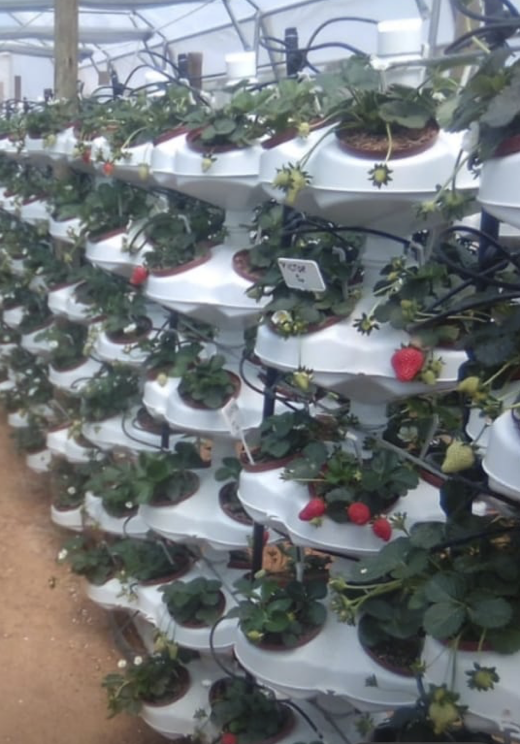
Labour efficiency is one of the clearest operational benefits of Vertipots. Traditional farming often requires soil preparation, ploughing, field maintenance and weeding. These tasks take time, require labour and add cost before the crop even reaches the harvesting stage.
With Vertipots, those tasks are either reduced or removed because the system does not rely on soil. There is no need for soil preparation or ploughing. Weeding, which the original article describes as a high-cost activity with no direct return, is completely eliminated.
Less Field Work Before Planting
In a conventional system, preparing the land can be one of the most labour-intensive parts of the production cycle. Soil must be prepared, maintained and managed throughout the season.
Vertipots changes that process by using individual pots and a vertical hydroponic structure.
This creates a more efficient workflow. Workers can focus on planting, monitoring and harvesting rather than spending time on field maintenance. The structured layout also makes daily operations easier to organise.
Easier Planting, Monitoring and Harvesting
The vertical arrangement makes crops highly visible and easy to access. This simplifies the picking process and reduces the time workers spend searching for ready produce.
In a well-organised growing system, visibility is not a small advantage. It affects speed, accuracy and labour use.
Harvesting under cover also means workers can continue operating even in rainy conditions. That supports continuity, which is valuable for any producer trying to maintain supply. Together, these design features create a more efficient working environment from planting through to harvest.
Cleaner Crops Grown Under Cover
The Vertipots system is designed for crops grown under cover. This provides several practical advantages. Produce stays cleaner, free from rain splash and better protected from external contaminants.
In fresh produce production, crop cleanliness has direct value because it affects handling, appearance and quality.
Protection From Rain Splash and External Contaminants
Rain splash can move soil and other material onto crops. Because Vertipots is soil-free and grown under cover, this risk is reduced.
The crops are not exposed to the same field conditions as open production, and they are easier to keep clean through the growing and harvesting process.
This does not mean growers can ignore good production and hygiene practices. It simply means the system’s design supports cleaner crop handling from the start.
Harvesting Can Continue in Rainy Weather
A further advantage of under-cover production is that workers can harvest comfortably even when it rains. This matters because weather interruptions can affect labour planning and crop movement.
When harvesting can continue despite rain, operations become more reliable.
For commercial producers, this efficient continuity can support better scheduling. It helps reduce delays and makes the picking process easier to manage.
The 700 ml Pot Exchange System
One of the most distinctive features of Vertipots is its pot exchange system. Each plant grows in a 700 ml pot. This pot size restricts root expansion just enough to keep the plant canopy compact and manageable.
That is important because plant size affects airflow, visibility and the risk of overcrowding. When plants become too dense, air movement can be restricted. Poor airflow can contribute to fungal disease pressure, especially where canopies become too crowded.
Compact Canopies and Better Airflow
The 700 ml pot helps keep the plant canopy compact. This supports better airflow and reduces the risk created by overcrowding and poor ventilation.
In protected cultivation, airflow is a practical production concern. A system that keeps plants manageable can help growers maintain better crop conditions.
This is one of the ways Vertipots links design to plant health. The pot is not only a container. It is part of the broader system that supports efficient crop management.
Faster Replacement Between Crop Cycles
The pot exchange system also supports continuous production. As one crop reaches the end of its cycle, it can be removed and replaced with another plant that is ready to grow.
This reduces downtime between crops and helps maintain production flow.
In many farming systems, time between crop cycles can become lost production time. Vertipots addresses this through an efficient replacement process. The grower can remove a finished plant and introduce the next one without reworking soil or preparing a new field.
Individual Pots Improve Crop Monitoring
The use of individual pots provides another important advantage: better crop monitoring. Plants can be removed from their containers to inspect root health and assess whether water supply is sufficient.
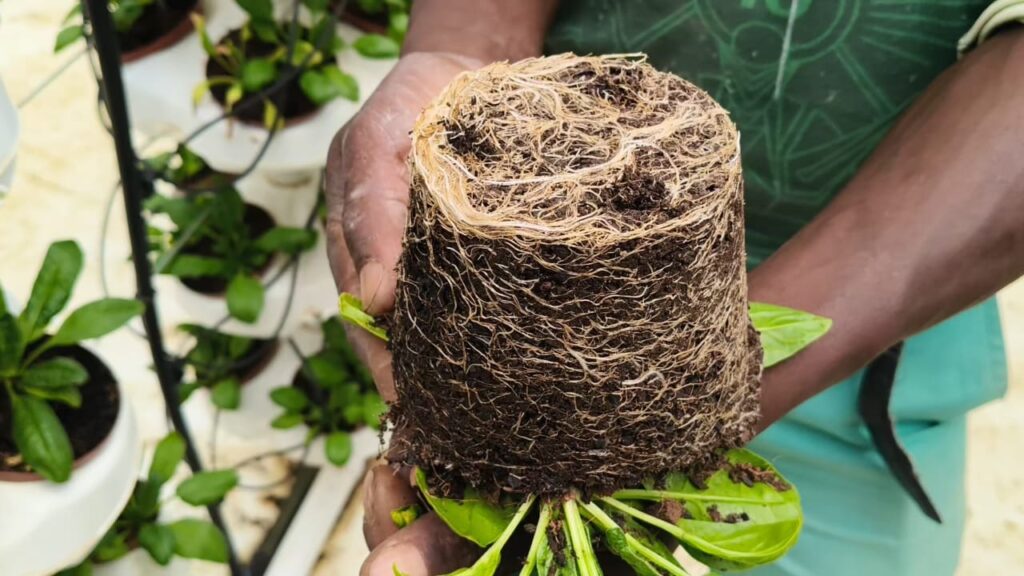
This gives growers a direct way to check plant condition before small issues become bigger losses.
Root Health Can Be Inspected More Easily
Root health is often hidden in conventional systems. With individual pots, the grower has a more direct view of what is happening below the canopy.
If a plant is not performing as expected, it can be removed and checked.
This makes monitoring more efficient because problems can be identified earlier. Early detection supports better decision-making and can help reduce crop losses.
Water Sufficiency Can Be Assessed
The original article also highlights the ability to assess water sufficiency. This is valuable because under-watering or inconsistent water supply can affect crop quality.
By checking individual pots, growers can better understand whether the system is delivering enough moisture to the plant roots.
This level of control supports a more efficient approach to crop production. Instead of relying only on surface observations, the grower can inspect the plant and root environment more directly.
Reducing Soil-Related Challenges
Because Vertipots does not rely on soil, it removes several challenges commonly associated with field farming. The article notes that the system eliminates soil-borne pathogens, avoids the need for heavy fertiliser applications and prevents degradation of growing media over time.
No Soil-Borne Pathogens
Soil-borne diseases and pests can create serious production challenges. A soil-free system helps avoid many of these issues because the crop is not planted in field soil.
This can reduce the need for interventions linked specifically to soil-related problems.
More Targeted Fertiliser Use
Fertiliser use in Vertipots is described as minimal and more targeted. This helps reduce costs while maintaining optimal plant nutrition.
Instead of applying heavy fertiliser across a field, nutrition can be directed more carefully within the system.
This is another example of efficient input use. The grower is not simply using less for the sake of using less. The system is designed to deliver inputs where they are needed.
Why Vertipots Fits the Future of Under-Cover Farming
The Vertipots Growing System represents a practical shift toward smarter, cleaner and more efficient agriculture. It brings together several important priorities in one system: space saving, water saving, labour reduction, cleaner produce, crop visibility, easier monitoring and continuous production.
For under-cover farming, these benefits are especially relevant. Protected cultivation already focuses on better control, cleaner production and improved use of resources. Vertipots adds a vertical, hydroponic structure that makes those goals easier to organise within a compact footprint.
The system is also well suited to environments where space is limited. Urban food production requires systems that can operate in non-traditional locations. Vertipots provides a way to think about farming in places where traditional fields are not available.
Conclusion: A Cleaner, More Efficient Way to Grow
The Vertipots Growing System shows how vertical hydroponic farming can support modern production needs without moving away from practical farming principles.
It uses space more effectively, manages water more carefully, reduces labour demands and supports cleaner crops grown under cover.
Its 700 ml pot exchange system adds another layer of value by keeping plant canopies compact, supporting airflow and allowing finished crops to be replaced quickly. The individual pot design also makes crop monitoring easier, giving growers more control over root health, water sufficiency and plant performance.
For producers looking at protected cultivation, urban farming or soil-free systems, Vertipots offers a practical example of efficient farming in action.
It is a system built around better use of space, labour, water and time – and that is why it deserves attention within the future of under-cover farming.
Frequently Asked Questions About the Vertipots Growing System
1. What makes the Vertipots Growing System efficient?
The Vertipots Growing System is efficient because it grows crops vertically, uses a compact footprint, reduces water waste, removes soil preparation and makes planting, monitoring and harvesting easier.
2. Why is Vertipots considered an efficient hydroponic system?
Vertipots is considered an efficient hydroponic system because it does not rely on soil and delivers moisture directly to plant roots within controlled containers.
3. How does Vertipots support efficient water use?
Vertipots supports efficient water use by reducing runoff and directing moisture to the root zone, where the plant can use it more effectively.
4. Is Vertipots efficient for urban farming?
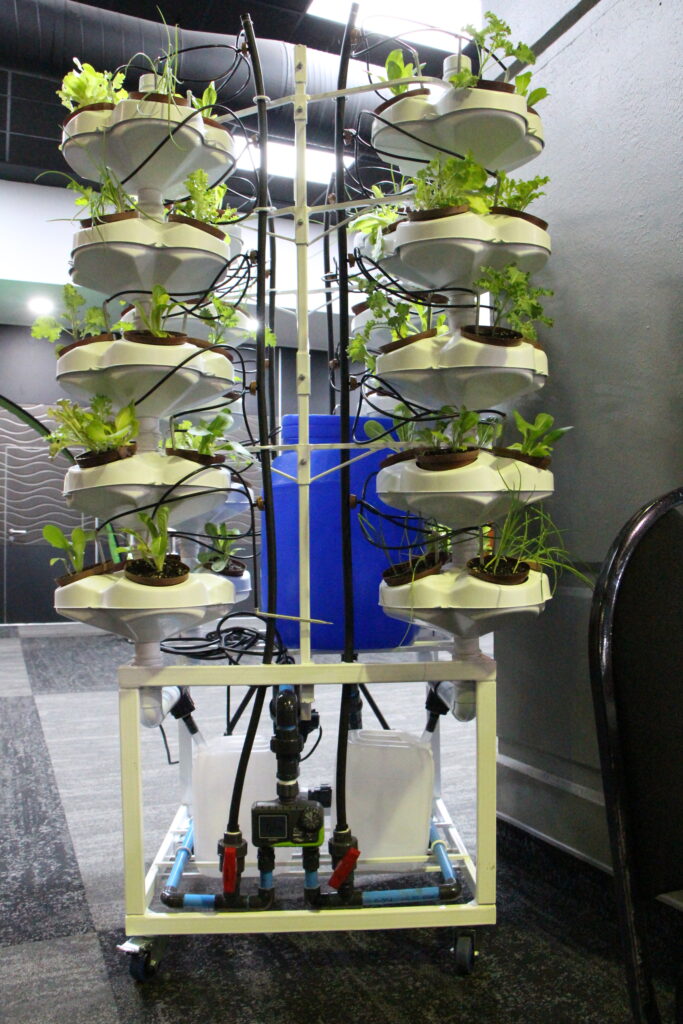
Yes. Vertipots can be efficient for urban farming because it allows crops to be grown in small or unconventional spaces such as rooftops, building tops and parking garage levels.
5. How does the 700 ml pot make crop production more efficient?
The 700 ml pot helps keep the plant canopy compact and manageable, which supports airflow, reduces overcrowding and makes crop replacement more efficient.
6. Why is the pot exchange system efficient?
The pot exchange system is efficient because finished crops can be removed and replaced quickly with plants that are ready to grow, reducing downtime between production cycles.
7. How does Vertipots make harvesting more efficient?
Vertipots makes harvesting more efficient by arranging crops vertically so they are visible, easy to access and quicker to pick.
8. Does growing under cover make Vertipots more efficient?
Growing under cover makes Vertipots more efficient by helping keep produce clean, protecting crops from rain splash and allowing workers to harvest even in rainy conditions.
9. How does Vertipots support efficient crop monitoring?
Vertipots supports efficient crop monitoring by using individual pots that can be removed to inspect root health and assess water sufficiency.
10. Why is Vertipots an efficient option for soil-free farming?
Vertipots is an efficient option for soil-free farming because it avoids soil-borne pathogens, reduces the need for heavy fertiliser applications and allows more targeted plant nutrition.
(M.O)