
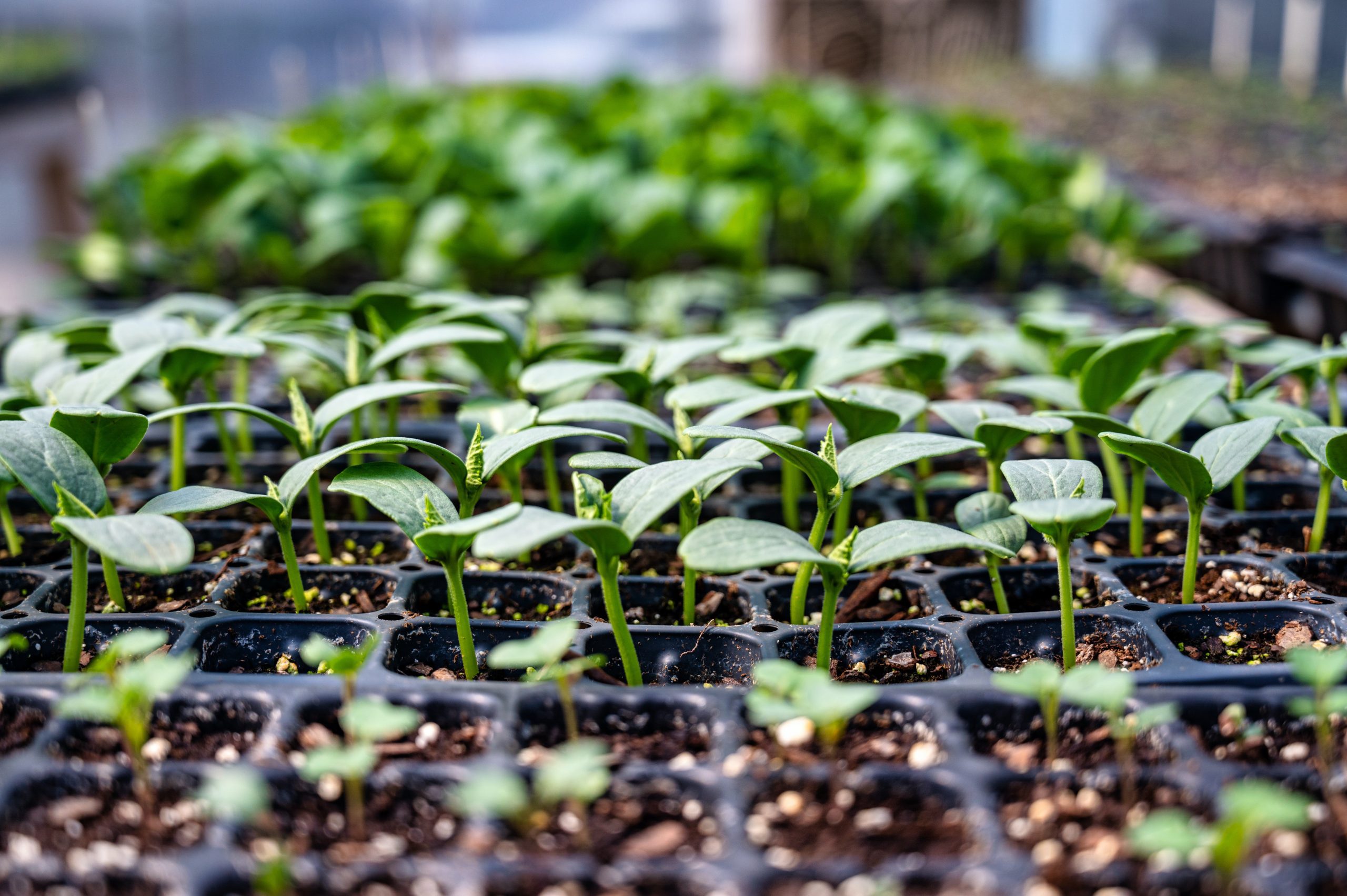
Seedling nurseries are often asked during the cooler months to produce tomato and pepper seedlings for greenhouse producers in warmer areas, or for those who want to capture the market early. Unlike summer seedling production, the management of winter seedling production needs expert management to ensure maximum protection of the seed and seedlings from cold and possible damages.
It is said seed is a “living organism” and is sensitive to the environment that it is subjected to. During the germination and subsequent development of the seedling, it is just as important to control the surrounding environment. Many seedling nurseries do just that with heated germination rooms where seedling trays are stacked for a predetermined amount of time to allow germination to occur. At emergence, the trays are usually transferred out into the nursery where the seedlings are allowed to develop.
The fine-tuned management of germinating seed is essential to ensure maximum germination and subsequent development of the plant. Tomatoes require the following temperature condition for germination:
Table 1: Seed Germination Temperature for Tomatoes:
| Characteristic | Seed Germination Temperature (oC) |
| Minimum | 10 |
| Optimum Range | 16 – 29.5 |
| Optimum | 29.5 |
| Maximum | 35 |
The temperature impacts the actual germination process, and also the rate of seedling emergence.
Table 2: Days to Seedling Emergence for Tomatoes (Benton Jones, 1999)
| Soil Temperatures for Germination (oC) | Seedling Emergence (Days) |
| 10 | 43 |
| 15 | 14 |
| 20 | 8 |
| 25 | 6 |
| 30 | 6 |
| 35 | 9 |
The information in the tables stresses the importance of temperature on the most important phases of the germination and emergence of tomato seed. Peppers have a similar sensitivity to temperature and should also be managed accordingly. During the cooler periods of the year, temperature fluctuations during germination and emergence of the seedlings will result in poor germination, uneven emergence, slow development of seedlings and sometimes a poor pull rate.
This common occurrence is often mistaken for poor quality seed, but the same seed lot will provide almost perfect germination, emergence and development when temperatures rise.
Most foremost seed producers provide a temperature range test with their tomato and pepper seed. The range test describes the effect of various temperatures on the germination of the particular lot. Each seed lot responds differently to temperature regimes and therefore, each seed lot is tested accordingly. The importance of these range tests illustrates how a particular seed lot needs to be treated to acquire the best germination and emergence of peppers and tomatoes.
During warmer periods of the year, the relatively higher temperature of the air outside the germination room prevents excessive heat loss from the room resulting in better control of the temperature within the germination room. However, during cooler periods, the lower ambient temperature makes it more difficult to maintain a constant temperature within the germination room.
There are many methods, varying in expense, used for heating these germination rooms. Some nurseries do not heat; others use air conditioners. The size of the room should determine the size of conditioner required to maintain the temperatures required for proper germination and emergence. Strict control of the room temperature is only possible with air conditioners. Nurseries that do not provide any heating should not produce more sensitive seedlings out of season. It is recommended that germination rooms be installed to assist in the production of high quality seedlings to their clients.
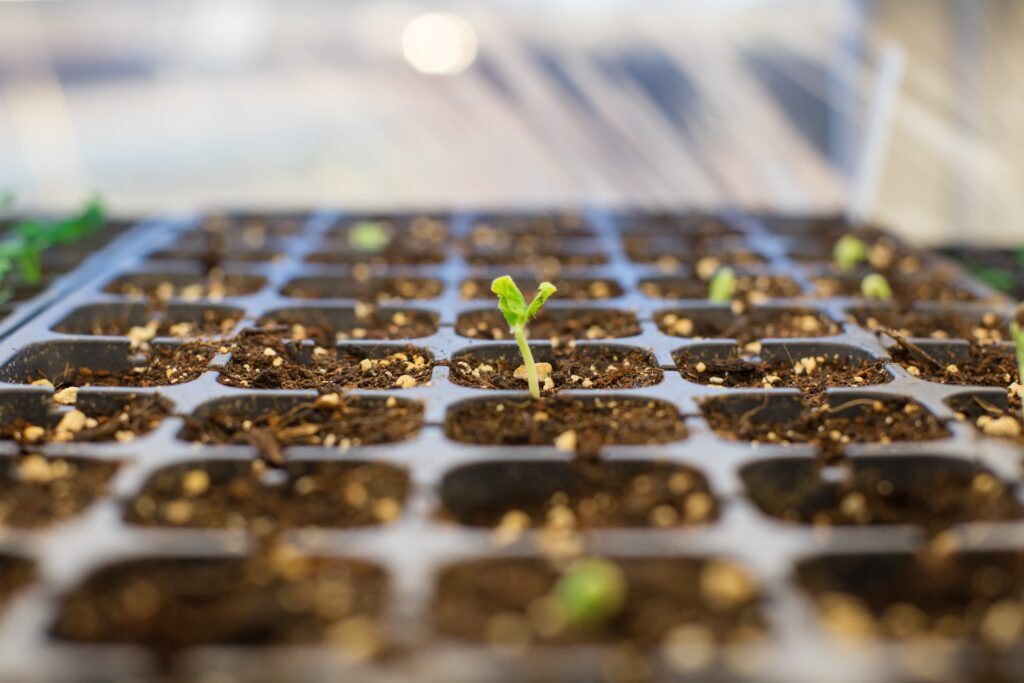
When cold growth media and cold water are used to fill and water the trays, it will take longer to warm up the medium to reach the optimal range for germination and emergence. If a large number of trays are stacked together before being put into the germination room, it will take longer for the trays in the center of the stack to heat up. If a large number of trays or several stacks are placed into the germination room at the same time, more heat will be required to raise the temperatures of all the trays.
The size and shape of the stack of trays will affect the ability of the warm air to heat up the cells in the center of the stack. During the cooler season, smaller stacks should be used to allow for better heating of the trays. Trays should be arranged into longer thinner stacks to allow for better heat penetration.
A larger germination room will obviously require more heat to raise the temperature to optimum levels, and when a large number of trays are installed into the room, even more heat is required. Rooms that are not adequately insulated will also require more heat to maintain adequate temperatures, and should a sudden temperature drop be experienced, a large amount of heat may be lost from the room resulting in a reduction in germination and emergence.
The movement of air in a germination room is also extremely important. Smaller germination rooms may only use a small heater resulting in a large difference in temperature from one side of the room to the other. Allowing adequate air movement within the room will assist in reducing the temperature gradients that may be present. Adequate ventilation around each stack of trays will also reduce the amount of time taken to raise the temperature of the medium in the cells to optimum levels.
Correct management of the temperature within a germination room is advantageous to any nurseryman. The result is better germination and emergence of seedlings, higher pull rates and better quality seedlings, all of which will result in better returns and financial stability. By popular seed growers