
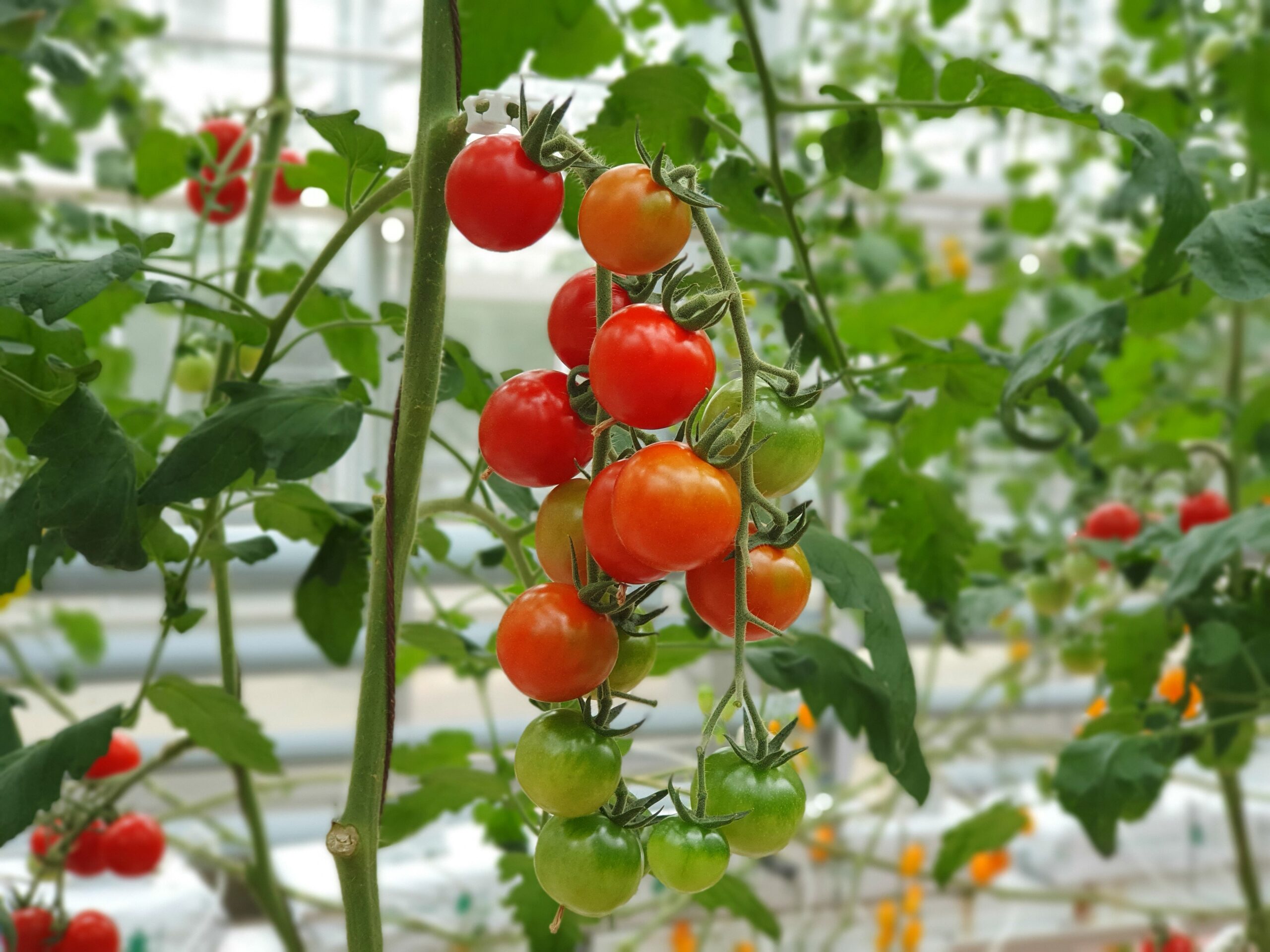
Absolutely nothing compares to the flavour of a home-grown tomato: sliced, with a sprinkling of salt and pepper. One of the best ways to ensure a bountiful harvest is by growing tomatoes in a greenhouse.
Growing tomatoes in a greenhouse has advantages and disadvantages
Tomatoes, Solanum lycopersicum, are a wonderful addition to our gardens. Unfortunately, in cooler climates, bountiful harvests are, at times, hard to come by. These plants with their wonderful lush, verdant green foliage, and beautiful fruit, are often susceptible to many pests and diseases.
The ripening of the fruit is very temperature-dependent; when conditions are too cool, or too hot, the ripening, or maturation of the fruit slows down considerably. Planting tomatoes in a greenhouse, however, allows you to increase your harvest by controlling the temperatures and by reducing the risk of pests and diseases. This article will give you tips on how to successfully grow tomatoes in a greenhouse.
Advantages and disadvantages
Advantages
Greenhouse production concerns a type of controlled environment cultivation. Being able to control the environment, temperatures, humidity, and even light, provides many obvious benefits to growing tomatoes in a greenhouse.
- In temperature-controlled greenhouses, you can start seeds earlier, pot out plants earlier, and enjoy earlier, longer and more plentiful harvests.
- Basic, unheated greenhouses can also provide a long and bountiful harvest. They will extend your harvest, as daytime temperatures will be warmer inside the greenhouse.
- The risk of tomato blight (Phytophthora infestans), one of the most common problems associated with growing tomatoes in the UK, can be reduced by growing tomatoes in greenhouses, but not totally eliminated, as fungal spores can still enter the greenhouse through windows and doors.
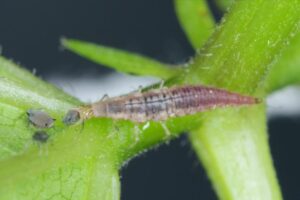
- Beneficial insects are also easier to utilise in a greenhouse than in outdoor cultivation.
Beneficial insects, such as the lacewing larva, can be selectively released in the greenhouse.
Disadvantages and how to overcome them
While growing tomatoes in greenhouses provides many benefits, there are also accompanying disadvantages. Why? Because, while the plants in your greenhouse enjoy this environment, so do pests and diseases. However, many of the problems can be avoided by closely monitoring the health and conditions of your plants.
Here are some ways to overcome disadvantages:

- Keep your greenhouse clean and organised. Remove old dead plant matter, pots, and growing media. This will reduce areas that could harbour insect pests and reduce the risk of disease contamination.
- Screen or net your entrances and windows to prevent pests from entering.
- Rotate your crops to avoid long-term accumulation of pests and diseases.
- Closed off greenhouses can have problems with mildews and fungal diseases. Ensure you have good air circulation to prevent this. Also keep foliage dry, especially at night, as the moisture benefits fungal pathogens.
- Catch fungal diseases and those caused by other pathogens early. Keep a close eye on your plants for symptoms. If they develop, remove the plants immediately.
Due to the high humidity, fungal diseases such as mildew can spread quickly in the greenhouse.
Pollinating tomatoes in greenhouses
Tomatoes have perfect flowers, which mean they have both male and female floral parts on the same flower. They are typically pollinated by the wind and by some insects. Therefore, it may be necessary to pollinate your tomatoes by hand in greenhouse unless you have enough ventilation to provide a breeze, or you employ the use of pollinating insects in your greenhouse.
Pollinating by hand can easily be done with a gentle touch of the finger, a small painter’s brush, or cotton bud, or even by shaking or vibrating the plants. Personally, I give the plants a gentle thump with my finger just below the flowers. This shakes the pollen off the anthers of the stamens and onto the stigma on the pistil.
Alternatively, a vibrating device, as simple as an electric tooth brush can provide enough vibration to shake loose the pollen. This is best done at the warmest time of the day, when relative humidity is at its lowest, and may need to be repeated daily while the plant is flowering.
When to plant
If you have a heated greenhouse, you can sow tomato seeds late February right through the middle of March. If your greenhouse is unheated, start your plants indoors in mid-March and move them out in April after the last frost. Harden off your starts to reduce transplant shock. You can sow your seeds in the greenhouse after the last frost.
With plenty of sunlight and fresh air, the ideal temperature for growing tomatoes in a greenhouse is between 21 °C and 27 °C. Keeping night time temperatures above 10 °C is sufficient for growth. However, flowering and fruiting is reduced and slowed when temperatures are below 15 °C and above 32 °C. Maintaining optimal temperatures will provide vigorous growth and an abundant harvest.
Best greenhouse tomato varieties
There are two main types of tomato plants, bush-type and indeterminate. Choosing the best tomatoes to grow in your greenhouse depends on the space you have. If your greenhouse is small, a smaller tomato variety like these may be a better choice. Indeterminate tomatoes will benefit the most from the extended growing season provided by a greenhouse.
This is because they will continue to flower and fruit as long as conditions are favourable. Bush-type tomatoes, on the other hand, only grow to a specific size, then produce their flowers and fruit.
Planting tomatoes in a greenhouse
While the greenhouse is a great tool for cultivation, there are several key points to keep in mind when planting tomatoes in a greenhouse.
How to plant tomatoes:
- Use nutrient rich, well-draining soil.
- Plant your young tomato plant into soil deep enough to cover 2/3 of the plant, or at least up to the second set of true leaves. Prune any leaves off that will be below the surface of the soil. Tomato plants will sprout roots along the stem below the soil surface to promote strong and vigorous growth.
- If planting in pots or small beds, fill your containers to a level 2 to 3 centimetres below the lip of the pots, or bed edge. This will ensure that none of your soil will spill out when watering.
- After planting, water enough to completely saturate your soil. After this, allow your soil to dry to a point where the surface is dry, but moisture can still be felt at 1 to 2 centimetres depth into the soil. From here, establish your watering regime according to the plants’ needs.
- With temperatures kept within a more optimal range, plants can grow faster and, therefore, will consume water and nutrients more quickly. So, keep an eye on the moisture level of your soil, and look for signs the plants will give you to tell whether you are over or under feeding.
Greenhouse tomato plant care
The growing conditions inside your greenhouse are different and more intense than those in the rest of your garden. Take care not over or under water plants. Monitor your plants for signals on how they are growing: the colours of green in the leaves, curled edges, or mottled patterns, as well as any signs of pests or diseases.
Watering tomatoes in greenhouses

When watering tomatoes in greenhouses, irrigate water on the soil instead of sprinkling it on the leaves or spraying the plants. Generally, greenhouses maintain a higher humidity inside than the atmosphere outside. Therefore, keeping water off the leaves will help you to avoid excessive foliage moisture that could facilitate fungal diseases. For the same reason, watering your plants in the early mornings is best. Tomato fruits benefit from consistent watering.
Too much water will cause damage like rot and fungal pathogens, while excessive dry periods can crack and damage the fruit. A good way to judge water needs is to saturate your soil and then allow it to dry out a bit before you water again. How often you should water tomato plants in a greenhouse depends on the size of the plants, the size of the containers, and temperature. For light, well-drained soil in beds, or in containers with drainage holes, it is best to allow excess water to drain away. Check the moisture level of your soil regularly to establish your own watering schedule.
Tip: Watering every day in the hot summer months is normal. Automated irrigation systems, either drip based or micro emitters, can be set up to provide a steady and consistent supply of water.
Fertilising greenhouse tomatoes
Tomatoes are heavy consumers of nutrients, and this is no different when cultivating in a greenhouse. Potassium helps the plants grow strong and robust, while phosphorous increases flower and fruit production. While, excessive nitrogen will facilitate rapid lush leaf growth, this foliage is softer and more susceptible to fungal leaf diseases.
Preparing your soil with good quality compost and manure is a good start to provide the right nutrition for your plants. As your plants grow and develop you will need to replenish nutrients with a good quality fertiliser which, slowly and steadily releases nutrients as the plants grow. When you need to remedy a deficiency, use a fast-acting liquid fertiliser. Using a fertiliser complete with micronutrients will help you avoid issues like blossom end rot.
Supporting greenhouse tomatoes
When it comes to supporting your tomatoes in greenhouses, there are many options. Bush-type tomatoes can easily be grown in medium-sized containers or even in a bed with one stake to support the plant from the centre. Indeterminate types can grow very tall, so these are best supported with strings, wires, or trellis systems.
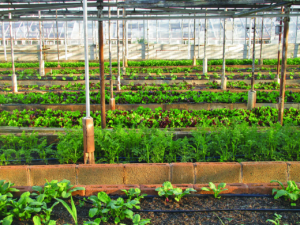
Strings or wires can be hung from somewhere near the roof of your greenhouse and secured to individual plants. You can train the plant to wrap around the string or wire as it grows. Alternatively, you can use a large mesh wire fencing, like pig stock fencing, as a trellis, and train the plant through it as it grows.
The fence needs to be large enough to stick your hand through and pull fruit back out. The fencing can be installed as a row for several plants, or used as a circular cage for individual plants. Whichever way you go, just remember that the weight of the fruit is too much for the plant to carry on its own, so it needs a little extra support.
The above is for a newcomer to tomato production, albeit smaller in size. Understanding the basics is the best step to enter the large greenhouse tomato production world!
Author: Nicolene Oosthuizen