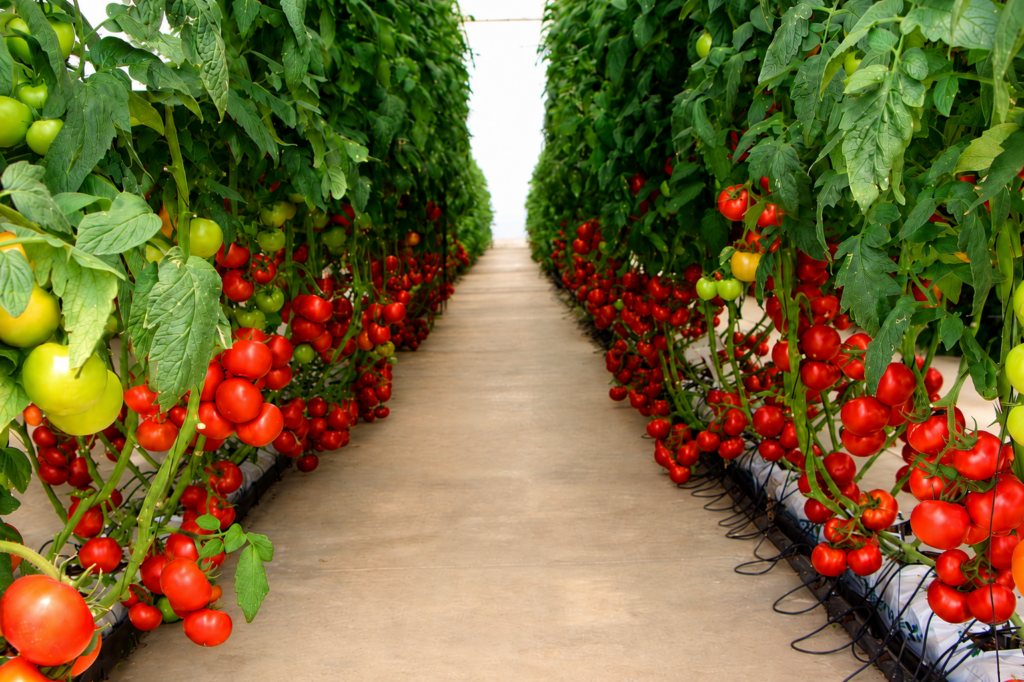
Undercover farming is no longer just about protecting crops from the weather. It has become a strategic way to produce more food with greater consistency, better water control, improved quality and stronger returns per square metre. For tomato growers, this shift is especially important. Tomatoes are high-value crops, but they are also demanding. They need stable water supply, precise nutrition, healthy roots, disciplined hygiene and careful climate management from planting to final harvest.
Across South Africa, greenhouse, tunnel and shade-net producers are facing the same commercial reality: input costs are rising, water is under pressure, labour must be used more efficiently, and markets are becoming less forgiving of inconsistent quality. A tomato crop that wastes water, loses nutrients or struggles with poor root-zone oxygen is no longer just underperforming. It is placing the whole business at risk.
This is why recirculating hydroponic tomato production deserves serious attention. It offers a practical answer to one of the most important questions in modern undercover farming: how can growers produce high-quality tomatoes while wasting less water, less fertiliser and less time?
The NGS® System, also known as the New Growing System, is a Spanish-developed, 100% recirculating hydroponic technology supplied locally through Greener Solutions. It is designed for commercial growers who want to produce without traditional substrates while maintaining strong control over water, nutrients and root-zone conditions. For tomato producers, the system offers much more than a different way to hold plants. It offers a different way to think about efficiency.
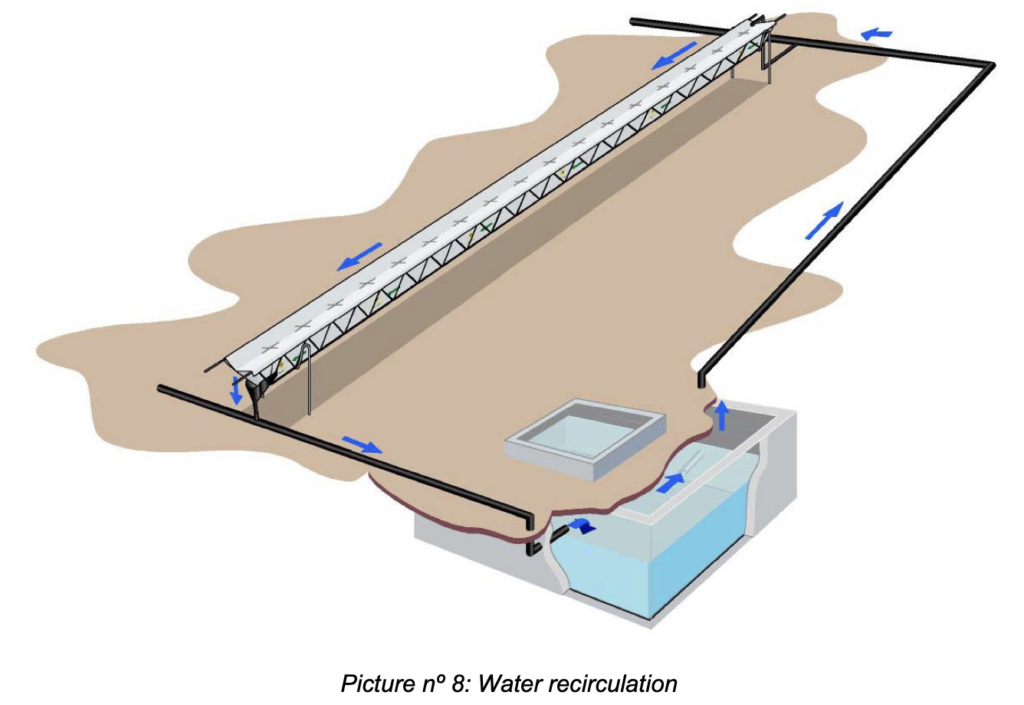
At the heart of the system is a simple but powerful principle: the nutrient solution should not be thrown away after one pass through the crop. It should move through the plant row, support the root zone, drain back to a central point, be checked, corrected and reused. That recirculating principle is what makes the system so relevant for modern undercover tomato production.
Why Tomato Growers Need Better Control
Tomatoes respond quickly to poor management. If water supply fluctuates, the crop shows it. If nutrition is inconsistent, fruit size and quality suffer. If root-zone oxygen drops, the plant loses vigour. If disease pressure builds in a weak system, production losses can escalate quickly. For growers supplying formal markets, restaurants, packhouses or export-linked buyers, these weaknesses are expensive.
Traditional soil production still has a place in agriculture, but it comes with practical limits. Soil conditions can vary across the same block. Pathogens can build up over time. Water movement can be uneven. Nutrient losses can be difficult to measure. In a country where water availability and cost are becoming serious risks, these inefficiencies matter.
Conventional hydroponic systems improved many of these problems, but they also introduced other management demands. Substrates must be bought, transported, installed, monitored and replaced. Drainage must be controlled. Salts must be managed. Water quality must be tested. If a grower does not capture and reuse drainage, valuable nutrients and water are lost.
A recirculating system changes the production mindset. Drainage is no longer treated as waste. It becomes part of the management cycle. The solution that leaves the crop contains information about uptake, balance and crop demand. When the grower collects and reuses that solution, the farm gains both resource savings and management insight.
How the NGS® System Works
The NGS® System is built around a multilayer polyethylene gutter. Unlike a simple single-channel design, the NGS® gutter contains interconnected layers. As nutrient solution moves through the system, it flows through carefully positioned openings and drops from one level to the next. This creates a series of small cascades inside the recirculating gutter.
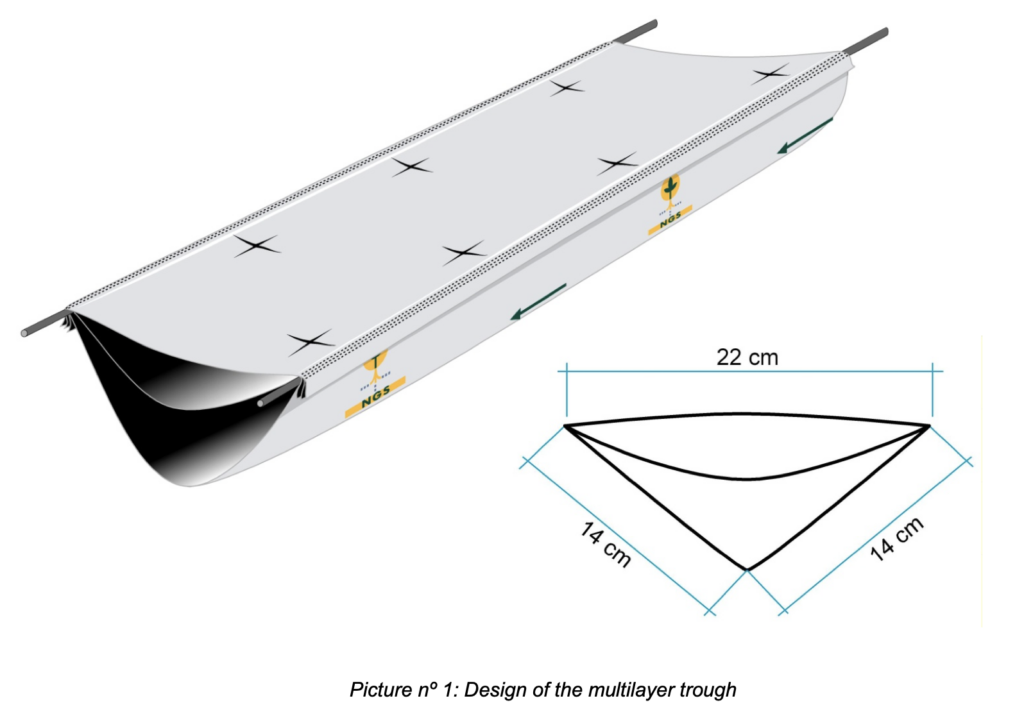
Those cascades are important because tomato roots need oxygen. In long production lines, oxygen depletion can become a limiting factor if the system does not actively support aeration. The cascade effect helps oxygenate both the nutrient film and the roots, supporting stronger root development and better plant activity.
The system uses intermittent irrigation cycles. These cycles can be adjusted according to the crop stage, greenhouse climate, plant load and production goals. A tomato plant does not have exactly the same requirements during establishment, flowering, fruit set and peak harvest. A flexible system allows the grower to respond to those changes instead of forcing the crop into one rigid programme.
After the nutrient solution passes through the crop, the excess is collected at the end of the recirculating line. It then returns to a central reservoir, where pH, EC and nutrient composition can be analysed and adjusted before the solution is used again. This is the core of the recirculating NGS® design.
For growers, the benefit is control. The farm can reduce water and fertiliser loss while keeping a closer eye on the crop’s real needs. In tomato production, where small imbalances can affect fruit quality weeks later, this level of control can become a major commercial advantage.
Why Root-Zone Oxygen Matters
Root-zone oxygen is often one of the most underestimated factors in hydroponic tomato production. Growers tend to focus on fertiliser recipes, crop protection and greenhouse temperature, but roots are the engine room of the plant. If the root system is weak, the plant cannot perform at its full potential.
Tomatoes are heavy-feeding crops. They need strong roots to support vegetative growth, flower development, fruit set and continuous production. When oxygen around the roots is limited, nutrient uptake becomes less efficient. Plants may become weaker, less balanced and more vulnerable to stress.
The NGS® gutter design helps reduce this risk by creating movement and aeration inside the system. As the nutrient solution cascades through the layers, oxygen is introduced more naturally across the production line. This is especially useful for commercial tomato rows that run over long distances.
Better oxygenation does not remove the need for good management, but it does give the crop a stronger foundation. Healthy roots support better uptake, better plant balance and improved resilience during periods of heat, high fruit load or rapid growth. In a high-value tomato crop, stronger roots can influence yield, fruit size, shelf life and final pack-out percentage.
Water Savings in a Water-Stressed Industry

Water has become one of the defining issues in South African agriculture. For undercover farmers, water is not only an environmental topic. It is a production risk, a cost factor and a long-term business concern.
The NGS® System has been associated with water savings of 50% to 60% compared with traditional soil cultivation. For tomato growers, that figure is significant. Tomatoes require consistent moisture, especially during fruit development. When water supply becomes unreliable, crop stress can affect both yield and quality.
The recirculating system does not simply deliver water and allow the unused portion to disappear. It captures the excess, returns it to the reservoir and makes it available again after correction. This reduces waste and improves the grower’s ability to manage scarce water resources.
In regions where boreholes, dams, municipal supply or seasonal rainfall patterns create uncertainty, a water-saving system can protect the business. Growers who reduce water losses are better positioned during drought periods, water restrictions and times of high irrigation cost. They may also be better prepared for future environmental audits and buyer requirements.
Water efficiency is no longer optional. It is part of competitiveness. A farm that produces more consistent tomatoes with less water is building a stronger future.
Fertiliser Efficiency and Smarter Input Use
Fertiliser remains one of the biggest costs in commercial tomato production. Because tomatoes are nutrient-hungry crops, growers cannot simply cut back and expect the same results. However, they can improve how nutrients are delivered, monitored and reused.
In a non-recovery system, drainage can carry valuable nutrients away from the crop. That creates two problems. The grower loses money, and the farm may create unwanted environmental discharge. A recirculating hydroponic system reduces this by keeping the nutrient solution inside the production cycle.
This does not mean the system runs itself. Recirculation requires discipline. Water quality must be tested. EC and pH must be managed. Nutrient composition must be corrected. The reservoir must be monitored. Hygiene cannot be ignored. But this discipline is exactly what allows a professional grower to improve efficiency.
The NGS® System gives growers the opportunity to feed according to the crop’s stage. Establishing plants, flowering plants and heavily loaded fruiting plants do not behave the same way. By analysing and adjusting the returned solution, the grower can make more informed decisions and reduce unnecessary waste.
This is where recirculating production becomes a practical management tool, not just an irrigation design. It gives the grower a clearer view of how the crop is responding and where adjustments are needed.
Why Substrate-Less Production Is Important
One of the major features of the NGS® System is that it operates without traditional substrates. This can be highly valuable for growers who want to reduce material handling, replacement, disposal and long-term substrate-related costs.
Substrates can work well, but they also bring management challenges. They must be sourced, transported, installed, monitored and eventually replaced. If reused incorrectly, they can create disease concerns. If disposed of poorly, they can add to environmental pressure. For large tomato operations, substrate logistics can become a serious operational issue.
A substrate-less recirculating system reduces dependence on these materials. It shifts the focus toward water movement, nutrient control, oxygenation and system hygiene. This can simplify certain parts of the operation while raising the standard of technical management.
It also gives growers a stronger sustainability story. Buyers increasingly want to know how food is produced. A tomato operation that can show lower water use, reduced nutrient waste and less dependence on disposable substrates has a clearer market position.
Long Lines, Flexible Design and Practical Management
Commercial tomato production often involves long crop rows, especially with indeterminate varieties grown over extended cycles. The NGS® System can accommodate cultivation lines of up to 200 metres in a single continuous run. This has practical value for greenhouse planning and daily management.
Longer lines can reduce the number of drainage points and intermediate installations required. This may simplify infrastructure and lower unnecessary complexity. For growers planning new projects or upgrading existing tunnels, greenhouses or shade-net structures, these details matter.
The system can also be customised for different geographical areas, greenhouse infrastructures and tomato variety requirements. This flexibility is important in South Africa because farms operate under very different conditions. A high-tech greenhouse in one region may not have the same needs as a more modest tunnel or shade-net structure elsewhere.
A recirculating system should therefore be planned around the farm, not forced onto the farm. Water quality, climate, crop choice, labour skills, budget and market goals should all influence the design. The best results come when the system is matched to the grower’s real production environment.
Automation and Data-Driven Growing
Automation is becoming a key part of modern undercover farming. Labour will always be important, but repetitive system decisions can often be improved with sensors, controllers and data monitoring.
Advanced NGS® setups can include on-demand irrigation, drainage optimisation, climate control integration and crop sensing. This allows growers to move beyond fixed irrigation habits. Instead of watering only according to the clock, the system can respond more closely to crop demand and greenhouse conditions.
Data can also help growers identify problems earlier. A shift in drainage EC, water uptake or pH can reveal changes before they become visible in the crop. In tomato production, early correction is valuable because today’s stress can affect tomorrow’s fruit quality.
Automation also supports labour efficiency. Workers can spend more time on scouting, training, pruning, harvesting and hygiene instead of repeatedly correcting preventable irrigation problems. For larger operations, this can improve consistency across the production area.
A recirculating hydroponic system works best when supported by good information. The more accurately the grower can monitor the crop, the more effectively the system can be managed.
Crop Quality, Uniformity and Market Access
Tomato markets reward consistency. Buyers want fruit that is uniform in size, attractive in colour, reliable in supply and suitable for shelf life requirements. A crop that produces high tonnage but poor uniformity may not deliver the best return.
The NGS® System supports more consistent root-zone conditions, which can help improve plant balance and fruit development. Better control over water, nutrients and oxygen gives the crop a stronger chance of producing uniform fruit across the production line.
Uniformity also helps in packing and grading. If more fruit falls into the desired market category, the grower can improve income without necessarily expanding the production area. This is why efficiency per square metre is such an important measure in undercover farming.
Market access is also changing. Formal buyers increasingly look at food safety, water use, production records and environmental responsibility. A recirculating system can support a farm’s ability to demonstrate better resource control. That can become valuable when competing for premium or more demanding markets.
Disease Pressure and Responsible Management
No hydroponic system eliminates disease risk. A grower still needs strict sanitation, clean water, trained staff, good crop scouting, responsible crop protection and disciplined removal of plant waste. Technology cannot replace farming skill.
However, the NGS® System can support cleaner production by improving root-zone oxygenation and reducing poor drainage conditions. Stronger roots and better system control can help plants remain healthier under pressure. In many cases, healthier plants need fewer corrective interventions.
Because nutrient solution is reused, hygiene becomes even more important. The returned solution must be managed properly, and growers should use the right technical support to reduce risk. This is especially true in high-value tomato production, where one disease issue can spread quickly if procedures are weak.
A recirculating system should therefore be viewed as part of a broader management programme. It works best when combined with water testing, filtration, sanitation, monitoring, staff training and clear operating procedures.
Sustainability That Improves Profitability
Sustainability must make commercial sense. For farmers, it cannot only be a public relations message. It must reduce risk, protect resources and improve the economics of production.
The NGS® System connects sustainability with profitability. Saving water reduces exposure to water shortages and lowers wastage. Reusing nutrient solution reduces fertiliser losses. Operating without traditional substrates can reduce material handling and disposal concerns. Recyclable materials support a more circular approach.
This is why recirculating hydroponics is so important for the future of undercover farming. It allows growers to speak about sustainability in measurable terms. Less waste. Better control. More efficient production. Stronger crop consistency.
As climate pressure increases, farms that use resources carefully will have an advantage. The growers who build efficient systems now will be better prepared for stricter markets, tighter margins and more unpredictable seasons.
Is the NGS® System Only for Tomatoes?
The NGS® System is especially relevant for tomatoes because tomatoes are large-plant crops with long cycles and high water and nutrient demand. However, the technology can also support crops such as peppers, cucumbers and leafy greens.
This gives growers room to diversify when market conditions or farm strategy require it. A tomato grower may not want to change crops immediately, but having infrastructure that can support more than one crop type may create useful future options.
The important point is that system design must match crop strategy. Tomatoes, cucumbers, peppers and leafy greens do not all have the same spacing, support, irrigation or climate requirements. Growers should begin with the production plan and then design the system around that plan.
What Growers Should Consider Before Investing
Before investing in NGS®, growers should assess their current production costs and limitations. Important questions include: how much water is being used, how much fertiliser is lost, what percentage of fruit is marketable, how consistent is quality, how strong is root health, how much labour is spent on preventable system issues, and what market does the farm want to serve?
A recirculating hydroponic system is not a magic shortcut. It requires management, monitoring and training. But for growers who are serious about improving efficiency, it can become a powerful production platform.
A phased approach may also be practical. Because the system is modular, growers can start at a manageable scale, measure results, train staff and expand with more confidence. This reduces risk and helps the farm build internal skill before scaling up.
The Future of Undercover Tomato Production
The future of tomato production will not be won by growers who simply use more water, more fertiliser and more land. It will be won by farmers who use better systems. Undercover farming is moving toward precision, efficiency and accountability.
The NGS® System fits this direction because it focuses on producing more value from the same area while reducing waste. It supports water savings, nutrient control, root oxygenation, labour efficiency, crop uniformity and sustainability. These are not small benefits. Together, they can shape the profitability of a commercial tomato operation.
For South African growers, this is a timely opportunity. Water scarcity, climate variability and input costs are unlikely to disappear. Buyers will continue to expect quality and consistency. Farmers who invest in efficient systems now will be better positioned to meet those demands.
Recirculating hydroponic tomato production is not just a technical upgrade. A recirculating mindset gives growers a clearer way to measure water, nutrients and crop response. It gives undercover farmers a way to protect resources, improve output, strengthen market access and build a more resilient production business.
For more information on the NGS® System and its use in greenhouse, tunnel and shade-net production, contact Greener Solutions at www.greenersolutions.co.za.
Frequently Asked Questions About the NGS® Recirculating Hydroponic System
1. What is the NGS® System?
The NGS® System, or New Growing System, is a substrate-less hydroponic production system that uses multilayer polyethylene gutters to grow crops such as tomatoes. It is designed as a recirculating platform that collects and reuses nutrient solution instead of allowing it to drain away as waste.
2. Why is the NGS® System important for tomato production?
Tomatoes need consistent water, nutrients and oxygen around the roots. The NGS® System supports these needs through controlled irrigation, natural oxygenation and nutrient solution reuse, helping growers produce more uniform and marketable fruit.
3. How does the system save water?
The system captures excess nutrient solution at the end of the crop line and returns it to a central reservoir. Because the water is analysed, adjusted and reused, the grower can reduce losses and make each litre more productive.
4. What does “recirculating” mean in hydroponics?
In hydroponics, recirculating means the nutrient solution is collected after passing through the crop and then returned to the system for reuse. This helps reduce water waste, fertiliser loss and uncontrolled runoff.
5. Does the NGS® System use a growing substrate?
No. One of the main advantages of the system is that it operates without traditional substrates. This can reduce substrate handling, replacement and disposal concerns while placing greater focus on water, nutrient and oxygen management.
6. How does the NGS® System improve root oxygenation?
The multilayer gutter design creates small cascades as the nutrient solution flows through the system. These cascades help oxygenate the nutrient film and root zone, supporting healthier root development.
7. Can the NGS® System be automated?
Yes. Advanced configurations can include crop sensing, climate integration, drainage monitoring and automated irrigation control. This allows growers to make decisions based on crop demand and system data.
8. Is the system suitable only for high-tech greenhouses?
No. The system can be adapted for different greenhouse structures, geographical areas and production goals. The final design should be tailored to the grower’s crop, climate, water quality, infrastructure and budget.
9. What crops can be grown with the NGS® System?
The system is highly suitable for large-plant crops such as tomatoes, peppers and cucumbers. It can also support leafy greens, depending on the project design and production objectives.
10. Why should South African undercover farmers consider this system now?
South African growers face water scarcity, rising input costs, climate variability and stronger market demands. A recirculating hydroponic system such as NGS® helps address these pressures by improving water efficiency, nutrient control, root-zone health and crop consistency.
Written by: M.O