South African vegetable production is entering a more robust biological era. For growers producing peppers, tomatoes and other high-value crops under tunnels, shade nets, greenhouses and intensive open-field systems, crop success is no longer judged only by what happens above the soil. It is increasingly shaped by the living system around the plant, from the seedling tray to the root zone, from harvest handling to the packed box.
This is where Soiltech’s approach to biological vegetable production becomes especially relevant. The focus is not simply on replacing one input with another. It is about understanding the plant, the soil and the microorganisms around them as part of one connected production system. When that system is balanced, supported and measured, growers can build a more robust foundation for establishment, plant momentum and postharvest quality.
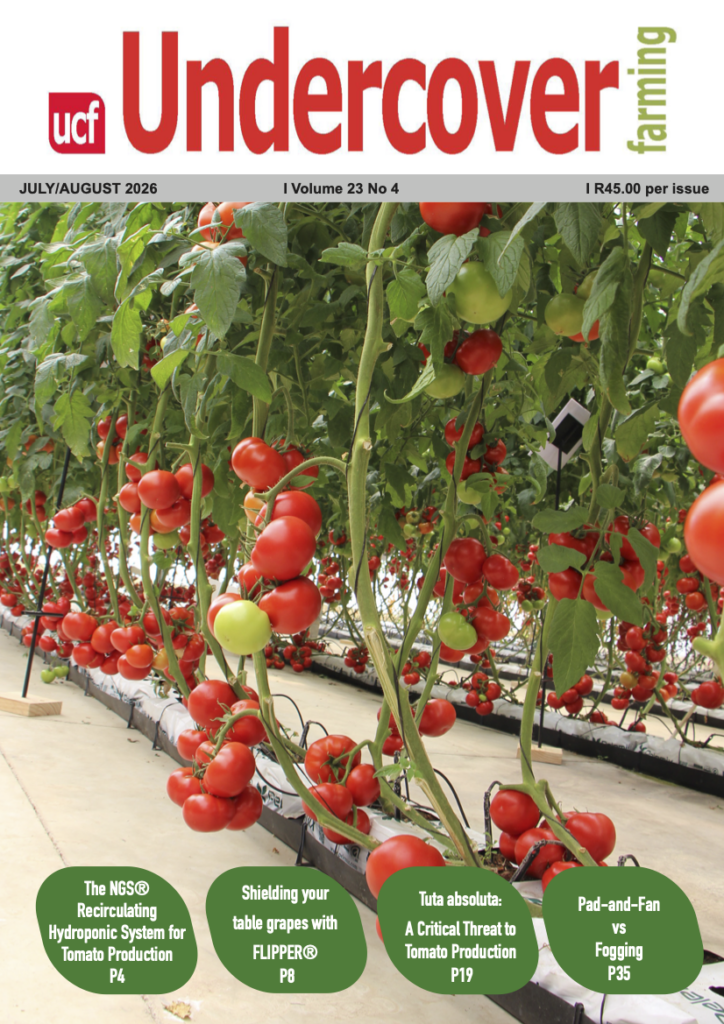
The full client-approved editorial also appears in the July/August 2026 edition of Undercover Farming Magazine, available From 1 July 2026 under the Publications tab.
A Robust Shift in South African Vegetable Production
Vegetable growers face pressure from every side. Retail programmes require consistent quality. Export channels demand careful residue management. Input costs remain high. Climate stress, disease pressure and quality rejections can quickly reduce margins. In this environment, growers need more than a reactive crop protection programme. They need a robust production strategy that supports the plant before visible stress becomes a problem.
The biological conversation has therefore shifted. It is no longer only about “going green”. It is no longer only about reducing conventional inputs. It is about managing a living crop system with more accuracy and more intention.
Soiltech’s biological farming approach is built around the idea that soil is not only a growth medium. Soil is a living, diverse biological ecosystem that supports plant nutrition, root activity and disease-suppressive potential. This fits directly with the needs of undercover and semi-protected vegetable production, where crops are high value, production cycles are intensive and uniformity matters.
A robust biological programme begins with the understanding that roots do not grow in isolation. Roots interact with water, minerals, microorganisms and the surrounding rhizosphere. When this environment is supported, the plant has a stronger opportunity to establish quickly and maintain productive momentum.
Why Establishment Matters Before the Crop Looks Stressed
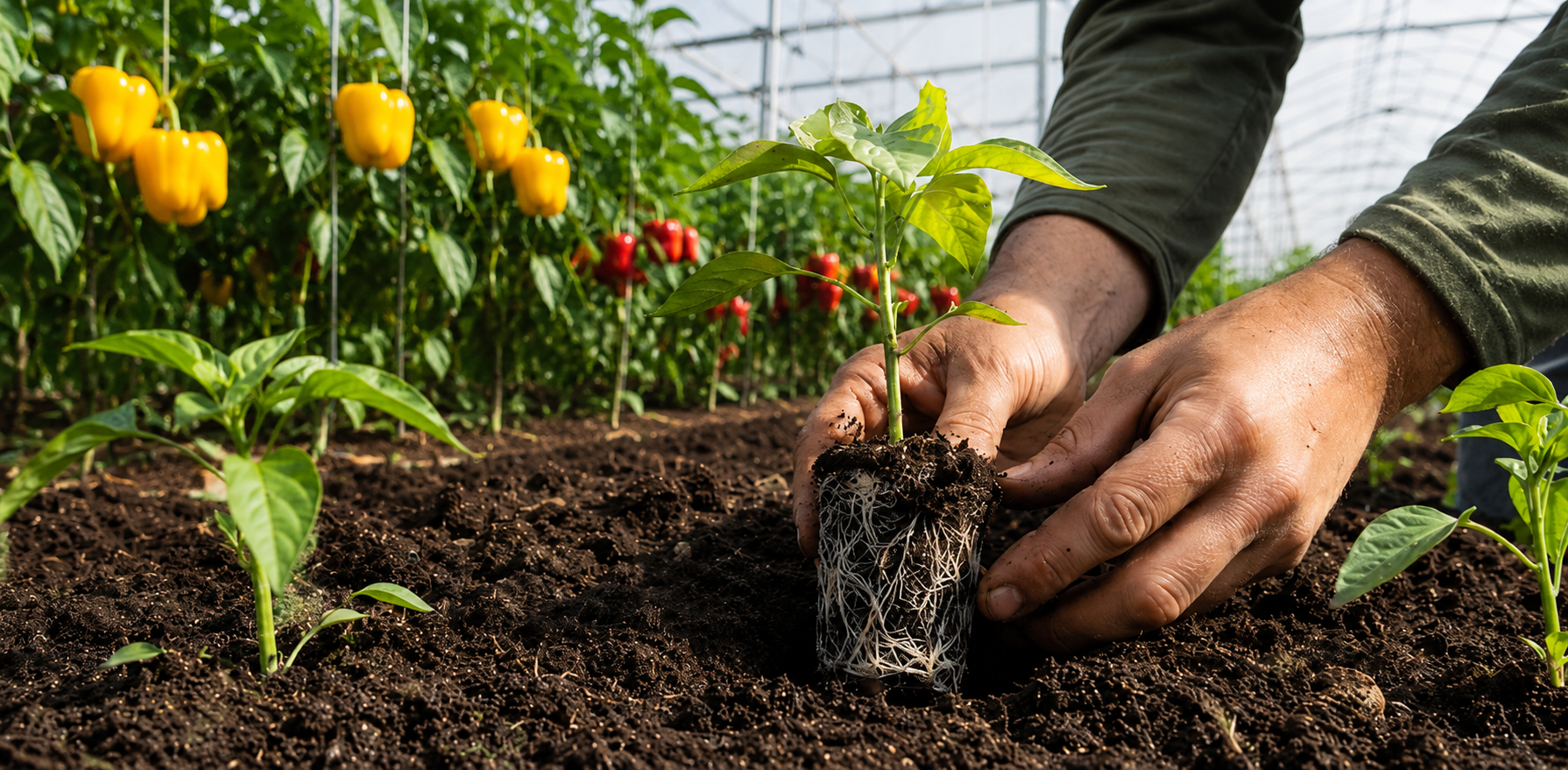
In vegetable production, one of the most important moments happens early. Transplanting is a stressful event. A young plant is moved into production, roots are handled, disturbed and sometimes damaged, and the seedling must quickly reconnect with water, nutrients and soil biology.
For peppers and similar vegetable crops, this short establishment window can influence the entire crop cycle. If seedlings struggle after transplanting, the result may be uneven stands, slower root development and weaker resilience later in the season. A robust biological establishment programme is therefore not a cosmetic addition. It is a core part of helping the crop regain rhythm after transplanting.
The seedling does not benefit from a lifeless root zone. It benefits from a living, balanced and protective root zone. Soiltech’s message is that the root zone must be managed as an active biological space. Beneficial organisms can occupy root surfaces and wounded sites, compete for space and nutrients, and help create a more stable environment around the plant.
This is an important difference in thinking. A purely suppressive approach often focuses on reducing problems broadly. A robust biological establishment strategy focuses on stabilising the root zone so that the young plant can continue building momentum.
The Root Zone Is a Living Production Area
Undercover and semi-protected vegetable growers often focus carefully on irrigation, fertigation, climate, structure, hygiene and crop work. Soiltech’s biological approach adds another essential layer: the living root zone.
The root zone is not only the place where the plant anchors itself. It is where the plant communicates with its surrounding environment. It is where water, nutrients, biology and chemistry interact. Soiltech’s farming programme recognises that the soil itself is a living ecosystem that assists the plant in supplying mineral nutrients for growth.
A robust root zone is therefore not only about adding products. It is about creating conditions where beneficial soil life can function. Soiltech’s approach includes representative soil sampling, laboratory analysis and correction of soil balance as part of the foundation of a programme. This is important because biological farming still needs measurement. A biological programme should not be treated as a guesswork exercise.
For growers, this matters because poor establishment is expensive. In a tunnel, greenhouse or shade-net block, uneven crop development affects more than plant appearance. It can affect timing, uniformity, fruit set, harvesting rhythm and packout potential. A robust root zone helps protect crop momentum from the beginning.
Robust Crop Momentum Starts with the Seedling
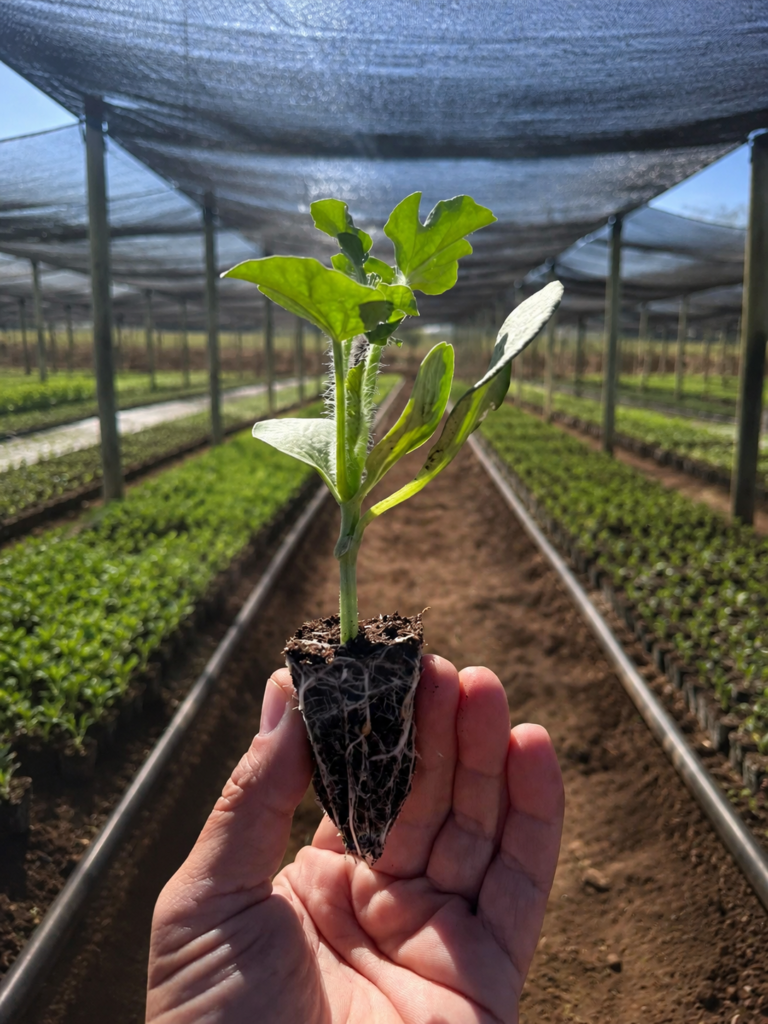
Crop momentum is one of the most practical reasons to take biological establishment seriously. When roots recover faster after transplanting, the crop can resume nutrient uptake sooner. Better early root activity can support vegetative growth, flowering and fruit set.
This is especially important for growers supplying formal retail programmes. A crop is not judged only on total yield. It is judged on how much of that yield meets specification. Uniformity, fruit quality and shelf performance all matter.
A robust biological establishment strategy can help the plant regain rhythm after transplant shock. It supports the idea that biology does not only fight disease; it can also help the plant continue functioning. The aim is not to create an artificial shortcut. The aim is to support the crop during one of its most sensitive production stages.
Timing is important. Product compatibility is important. Handling is important. Measurement is important. Soiltech’s approach does not suggest that biologicals should be treated casually. Biological products and biological fertilisers must be understood as technical agricultural inputs. For commercial growers, the opportunity lies in verified, registered and properly supported programmes.
Soiltech’s Integrated View of Biological Farming
Soiltech was founded in 2004 and has developed its approach around healthier soils, healthier plants and more nature-friendly production methods. Its motto, “Healthy Soil Grows Healthy Plants”, reflects the company’s broader focus on fertile living soils and sustainable production.
This philosophy is relevant to vegetable growers because biological farming cannot be separated from soil function. Soiltech’s programmes favour healthy, fertile living soils and aim to help farmers work with natural systems rather than against them.
A robust programme considers biological, chemical and organic factors together. Soiltech describes its approach as biologically, chemically and organically integrated farming. This is useful wording because it avoids the false idea that growers must choose between technical farming and biological farming. The better approach is integrated. It is measured, practical and fitted to the farm’s circumstances.
For undercover vegetable systems, this integrated view is particularly useful. Greenhouse, tunnel and shade-net growers can apply programmes more accurately, monitor crop response more closely and make use of technical support. At the same time, the intensity of these systems means that problems can move quickly if the crop is not supported properly from the start.
Plant Growth Promoting Microorganisms in a Robust Programme
Plant Growth Promoting Microorganisms, or PGPMs, are central to Soiltech’s biological approach. These beneficial bacteria and fungi exist in the rhizosphere, the soil zone surrounding plant roots where biology and chemistry are influenced by the root.
PGPMs can support plant health and growth in different ways. Soiltech’s website refers to benefits linked to nitrogen-fixing, hormone production, antibiotics, volatile metabolites and the solubilisation of mineral phosphates and other nutrients. In practical terms, this means PGPMs are part of the biological environment that can support nutrient availability and plant function.
A robust biological vegetable production programme therefore asks a more advanced question. It does not only ask: “What input can solve this problem?” It asks: “What biological environment is being created around the plant?”
That question matters because beneficial organisms need suitable conditions. They need to be placed correctly, supported correctly and used within a programme that makes sense. Soiltech’s farming programme also includes microorganism feeding programmes, recognising that agricultural soils may not always provide enough maintenance for soil life on their own.
This reinforces a key point for growers: biological inputs are not magic rescue products. They work best as part of a robust planned system.
Vermitech Lab and the Role of Local Biological Support
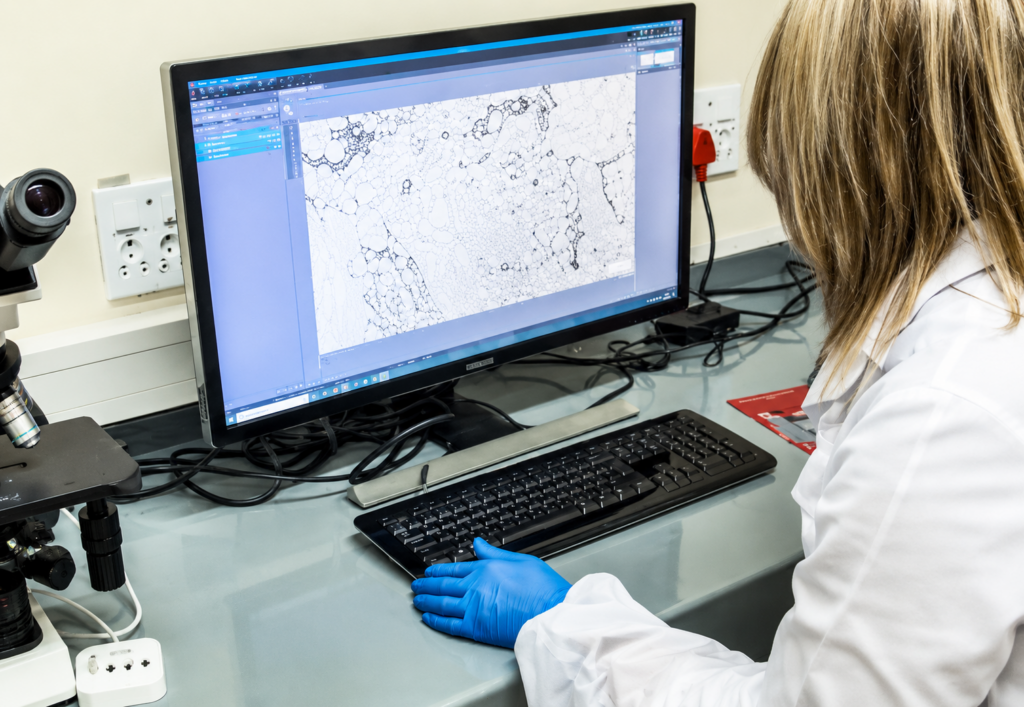
Vermitech, Soiltech’s sister company and laboratory division, plays an important role in the biological system described by Soiltech. The laboratory focuses on identifying and producing Plant Growth Promoting Microorganisms that can support Soiltech’s biological programmes.
The role of laboratory support is important because biological farming depends on organisms, purity, strain performance and field relevance.
Vermitech’s website notes that products must show yield increases in the field over several seasons and conditions before being included in the Soiltech package. It also notes that current products are registered at DALRRD under Group three Fertilizers.
For growers, this supports a robust commercial approach. Biological products must be more than interesting ideas. They must be part of a tested, practical and registered system.
In the context of peppers, tomatoes and other high-value crops, this laboratory-backed approach helps connect biological theory with farm application. It also supports the broader message that the future of biological farming is not simply about using more biology. It is about using verified, registered and integrated biology.
Postharvest Disease Is Also a Microbial Balance Issue
The biological discussion does not end at the root zone. Postharvest disease is another area where microbiome thinking becomes important.
In tomatoes and peppers, quality losses can happen after the grower has already carried the cost of production. Fruit may look acceptable at harvest but later develop decay, quality issues or shelf-life problems. These losses can trigger rejections, shorten marketability and reduce returns.
Research presented through Vermitech focused on postharvest disease dynamics in tomatoes and peppers. In peppers, Fusarium species were identified as dominant pathogens, with organisms such as Rhizopus and Penicillium also contributing to breakdown. In tomatoes, Geotrichum and Cladosporium were linked to sour rot and black mould symptoms.
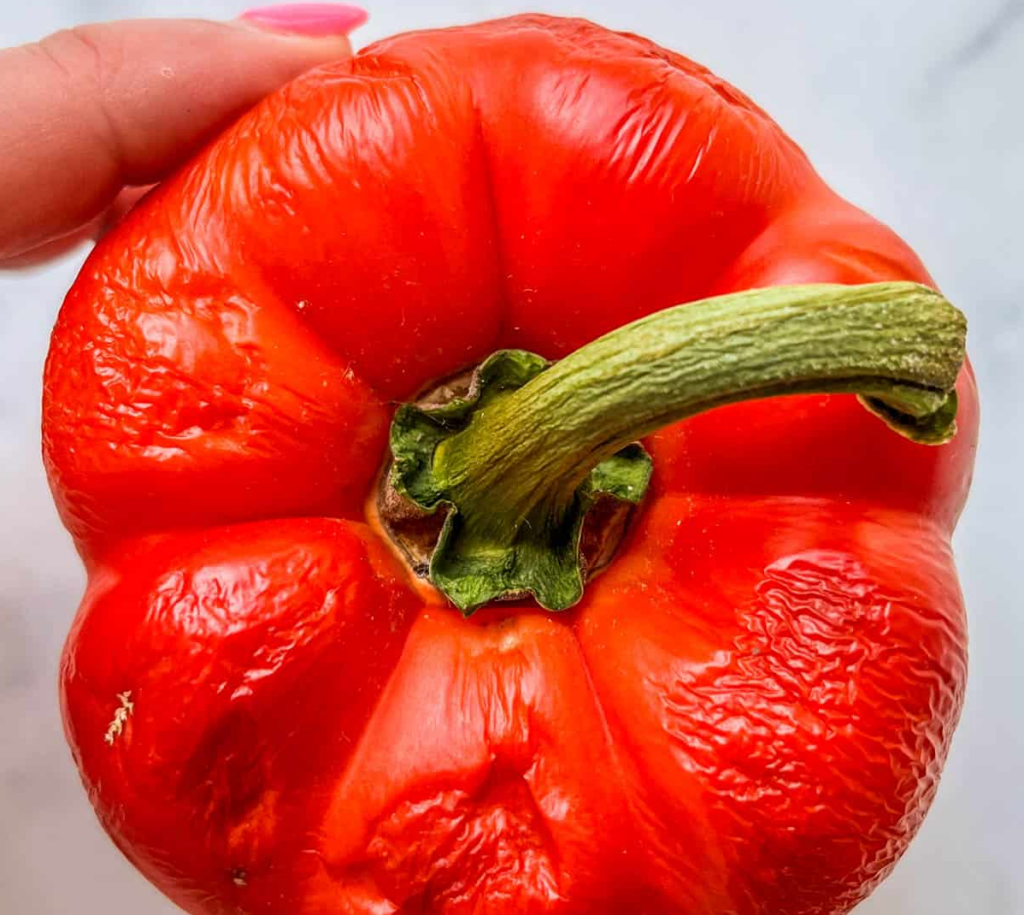
In tomatoes and peppers, quality losses can happen after the grower has already carried the cost of production. Fruit may look acceptable at harvest but later develop decay, quality issues or shelf-life problems. These losses can trigger rejections, shorten marketability and reduce returns.
Research presented through Vermitech focused on postharvest disease dynamics in tomatoes and peppers. In peppers, Fusarium species were identified as dominant pathogens, with organisms such as Rhizopus and Penicillium also contributing to breakdown. In tomatoes, Geotrichum and Cladosporium were linked to sour rot and black mould symptoms.
However, the robust insight is not only that pathogens are present. The more advanced view is that fruit surfaces carry microbial communities. Some organisms are harmful. Some may be protective. Some become problematic when the balance shifts.
This means postharvest decay should not be seen only as pathogen presence. It should also be understood as microbial imbalance.
The Fruit Surface as a Living Ecosystem
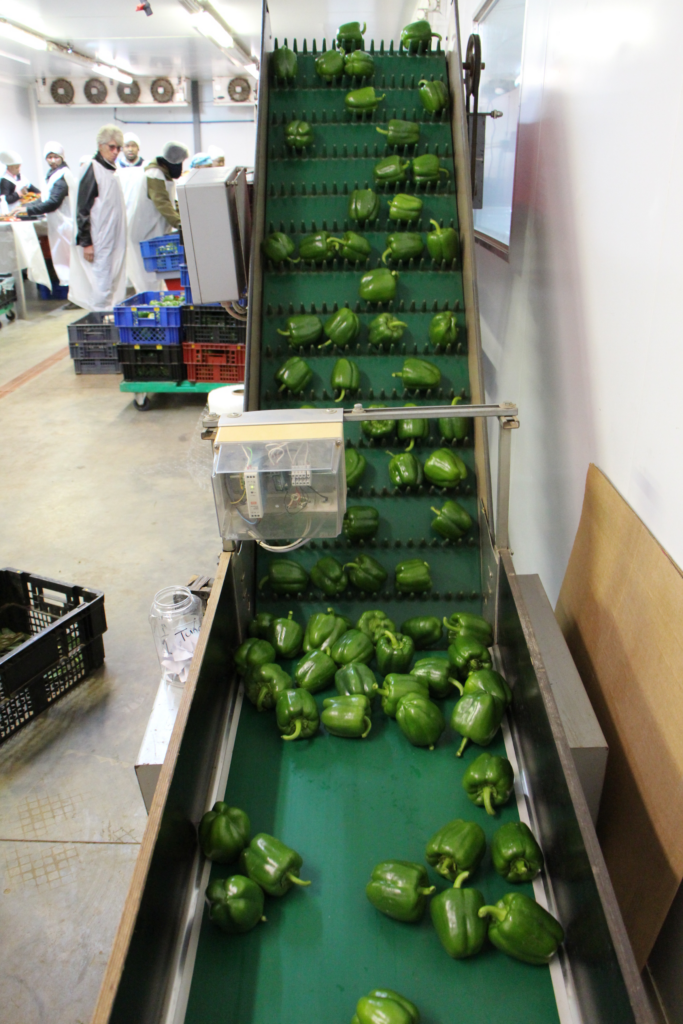
A harvested tomato or pepper is not a sterile object. It carries microorganisms on its surface. The crop and its microorganisms can be viewed as one biological unit. This concept has practical value because postharvest outcomes are influenced by what happens before harvest, during harvest and after harvest.
Wounds, rough handling, water quality, sanitation, temperature breaks and poor airflow can all shift the microbial balance. A robust microbiome-based strategy does not replace packhouse hygiene. It strengthens the case for it.
Clean systems remain important. Careful handling remains important. Cold-chain discipline remains important. A biological postharvest view adds another layer by recognising that beneficial organisms may help suppress decay organisms before they dominate.
For undercover vegetable growers, this is especially relevant. High-value crops often move through demanding market channels where appearance, firmness, quality and shelf life matter. A robust production strategy must therefore consider the crop from root to fruit, not only until harvest.
Why This Matters for Greenhouse, Tunnel and Shade-Net Growers
Protected and semi-protected vegetable systems are well suited to this biological discussion. These systems are often more controlled, but they are also more intensive. The same structures that help growers manage crops more accurately can also create repeated production pressure.
In a greenhouse, tunnel or shade-net programme, growers can apply biological programmes more precisely. They can monitor crop response more closely. They can identify pressure points earlier. They can use laboratory support where needed.
At the same time, these systems do not forgive poor planning. If biologicals are treated only as rescue products, much of their value may be lost. A grower who waits until roots collapse or fruit rots in the box has already missed the best opportunity.
The more robust strategy is prevention. Establish a stronger root zone. Protect plant momentum. Monitor microbial threats. Reduce postharvest stress points. Build the crop as a living system from the start.
Biologicals Are Technical Agricultural Inputs
One of the most important messages for growers is that biological products should not be treated as vague natural solutions. They are technical agricultural inputs.
That means growers should ask practical questions. Is the product registered for its intended use? Does it have local crop data? How does it fit with fertiliser, fungicide and irrigation programmes? How should it be stored, handled and applied? What is being measured?
A robust biological programme needs discipline. Correct timing matters. Product compatibility matters. Handling matters. Irrigation scheduling matters. Crop monitoring matters.
This does not make biological farming more complicated than conventional farming. It simply means biological farming must be treated with the same professional seriousness. The strongest programmes are not emotional. They are practical, measured and built around the crop’s needs.
From Soil Health to Shelf Performance
The value of Soiltech’s approach is that it connects early establishment with later quality. A plant that establishes poorly may struggle with uniformity, root development and resilience. A fruit that is handled poorly may face microbial imbalance and postharvest decay. These are not separate conversations. They are linked parts of the same production chain.
A robust biological vegetable production model therefore begins in the root zone but continues through the crop’s full journey. It asks how the plant is established. It asks how the root zone is supported. It asks how beneficial microorganisms are used. It asks how postharvest disease pressure is understood. It asks how the packhouse protects quality.
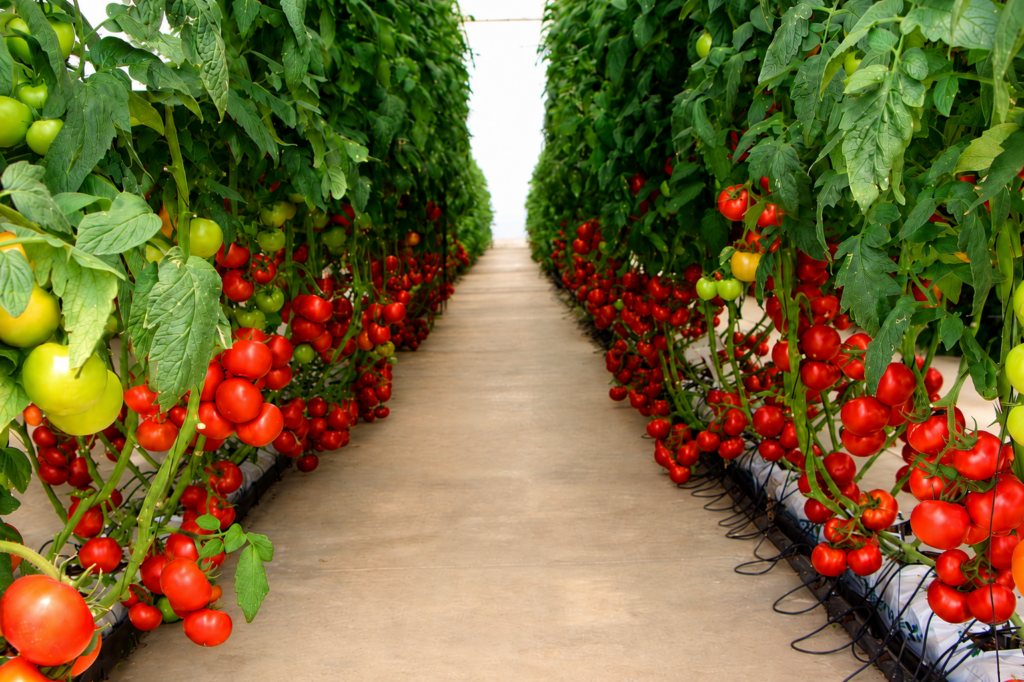
This is why the “soil to shelf” idea matters. The crop is not only a plant in the soil. It is a living system that moves from establishment to harvest to packed product. The more growers understand that system, the better they can manage risk.
Local Proof and Measured Adoption
The next step for biological adoption in South African vegetable production is local proof. Pathogens differ by crop, farm, region and season. Biological antagonism is also strain specific. What works against one organism may not work equally well against another.
This is why local trials, diagnostics, residue-aware programmes and economic evidence matter. Growers do not need vague promises. They need robust evidence that fits their crop, production system and market requirements.
Soiltech and Vermitech’s work points to a more complete production model. Biological establishment can help protect early crop performance. Microbiome-based postharvest strategies can help protect quality after harvest. Together, these areas create a more robust view of vegetable production.
The Future Is Integrated Biology
The future is not chemical versus biological. It is verified, registered and integrated biology.
That line is important because it keeps the discussion practical. Growers are not being asked to abandon technical farming. They are being asked to understand biology as part of technical farming.
A robust biological programme can sit within a broader farming strategy. It can work with soil analysis, crop monitoring, irrigation, nutrition, sanitation, postharvest discipline and laboratory support. It can help growers think beyond short-term problem solving and toward system strength.
For South African vegetable producers, especially those working in undercover and semi-protected systems, this approach is highly relevant. It speaks to the commercial realities of quality, uniformity, residue management, input cost pressure and postharvest risk.
Conclusion: A Robust Living System from Root to Fruit
Vegetable production is changing because the way growers understand the crop is changing. The plant is no longer viewed only as a plant. The soil is no longer viewed only as a medium. The fruit surface is no longer viewed as empty. Each part of the system carries biological activity that can influence crop performance and quality.
Soiltech’s approach brings this thinking into practical farming. It highlights the value of living soils, biological establishment, PGPMs, Vermitech laboratory support and microbiome-based postharvest thinking.
For growers, the message is clear. Robust biology is not a last-minute solution. It is a planned system. It begins before the crop looks stressed. It supports the plant during establishment. It helps protect crop momentum. It encourages a more balanced view of postharvest disease. It connects the soil to the shelf.
In high-value vegetable production, that connection matters. A robust crop starts with a living root zone and ends with fruit that has been protected through every stage of the production chain.
Frequently Asked Questions
1. What is biological vegetable production?
Biological vegetable production is an approach that manages the living system around the plant, including soil biology, the root zone and beneficial microorganisms. In Soiltech’s approach, the goal is to build a robust production environment that supports healthier soils and stronger plants.
2. Why is transplant establishment important in peppers?
Transplanting is a stressful stage for peppers because young roots are handled, disturbed and sometimes damaged. A robust establishment programme helps the seedling reconnect with water, nutrients and soil biology as quickly as possible.
3. What does Soiltech mean by living soil?
Soiltech views soil as a living biological ecosystem, not only as a growth medium. A robust living soil can support plant nutrition, root activity and a more balanced production environment.
4. What are PGPMs?
PGPMs are Plant Growth Promoting Microorganisms. They include beneficial bacteria and fungi that occur in the rhizosphere and may support plant health, nutrient availability and growth. They form part of Soiltech’s robust biological farming programmes.
5. What role does Vermitech Lab play?
Vermitech is Soiltech’s laboratory division. It focuses on identifying and producing Plant Growth Promoting Microorganisms for Soiltech’s biological programmes. This gives the programme a more robust technical foundation.
6. Are biological products a replacement for all conventional inputs?
The stronger message is not chemical versus biological. The more robust approach is verified, registered and integrated biology that fits within the grower’s full production programme.
7. Why does postharvest disease relate to the microbiome?
Fruit surfaces carry microorganisms. Some are harmful, some may be protective and some become a problem when the balance shifts. A robust postharvest strategy looks at microbial balance as well as hygiene, handling and cold-chain discipline.
8. Why are tunnels, greenhouses and shade nets suited to biological programmes?
Protected and semi-protected systems allow growers to apply programmes more accurately and monitor results more closely. This makes them well suited to a robust biological approach, provided biologicals are used as part of a planned system.
9. What should growers ask before using biological products?
Growers should ask whether the product is registered for its intended use, whether it has local crop data, and how it fits with fertiliser, fungicide and irrigation programmes. A robust programme must be measured and technically supported.
10. What is the main benefit of a soil-to-shelf biological approach?
The main benefit is a more complete production model. A robust soil-to-shelf approach supports establishment, protects crop momentum, considers postharvest microbial balance and helps growers manage quality from root to fruit.
(M.O)