
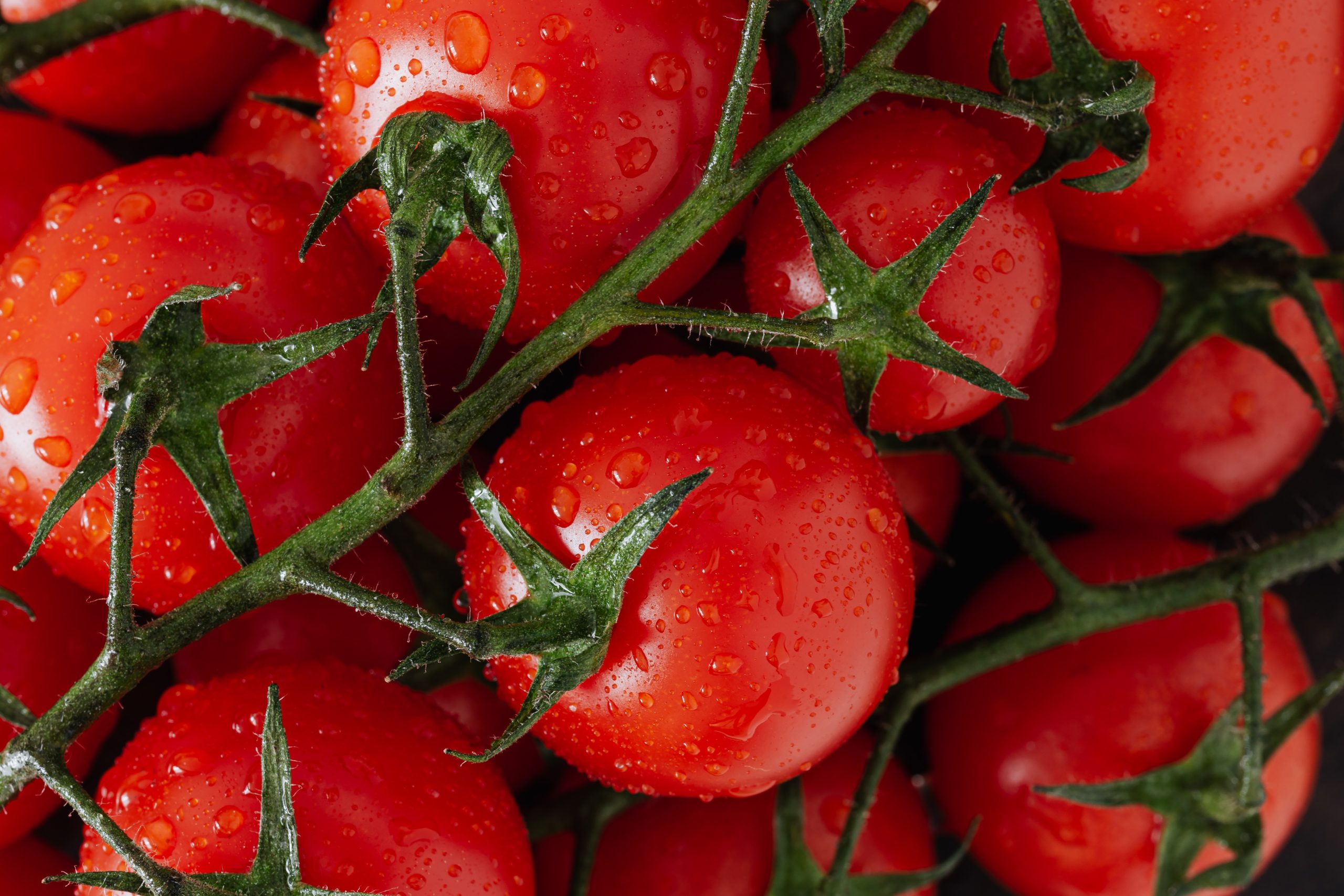
Flower Buds – The tomato (Lycopersicon esculentum) is a fruit vegetable crop and is produced throughout the world by various categories of farmers, from backyard, small to commercial farmers. It is planted in both open and closed (tunnel) areas for fresh and industrial markets. Tomatoes are transplanted to the field as seedlings for better establishment and production (yield). The tomato can be grown as an indeterminate or determinate plant.
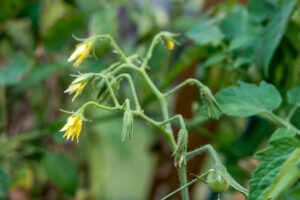
Flower buds differentiation is one of the most important initial growing stages for better production, because it influences the quantity and quality of tomato yield, especially from the first three fruit clusters.
The process of flower buds differentiation occurs mostly from 25 – 30 days after seed germination and can only be observed under microscope. Most of both tunnel and open field producers do not regard flower bud differentiation as one of the important growth stages in tomato production for better initial yield. Poor quality growth media and incorrect temperature promote poor flower buds differentiation.
Relationship between flower buds differentiation and tomato production (yield)
Flower buds differentiation is primarily influenced by quality of growth media and optimum temperature. When tomato seeds are planted in good quality growth media with balanced nutrients, enough aeration and drainage, seedlings will be healthy and strong. Therefore they will be able to develop good flower bud differentiation.
Optimum temperature (240c –280c during the day and 120c – 150c during the night) is needed for good flower bud differentiation after sowing and before transplanting. After the 8th or 9th leaf has been differentiated in the apical meristem (growing point), the first flower bud is mostly differentiated. Stage of flower buds differentiation can only be observed under a microscope. Visual appearance of the plant at this stage is a small seedling with two to three (2-3) true leaves, which is mostly 25 to 30 days after germination.
Flower buds differentiation is physiologically a very important stage for the growth of the tomato plant and it is advisable not to apply fertiliser, especially nitrogen until differentiation of the first three flower buds are completed. When nitrogen is applied before or at flower bud differentiation stage the process may be delayed or poorly developed, due to a high rate of vegetative growth.
If the vegetative growth is vigorous, the reproduction development of a crop is poor. After buds differentiation the growing point will differentiate three (3) leaves, and then differentiates the second flower bud and the process continues until the plant is pinched or matured. Differentiation of the first to third flower buds is completed mostly from 30 – 35 days after germination or at 6 true leaf stages.
Monitoring
Tomato plants need close monitoring from seedling stage. Seedlings must be well established. Flower buds differentiation is one of the most vital early growth stages in tomato production for better initial yield, especially on indeterminate tomato plants. Producers need to create favourable conditions for development of good flower buds differentiation.

It is necessary to utilise quality growth media and optimum temperature for better flower buds differentiation. The application of fertiliser after seed germination, especially nitrogen, should be avoided or regulated until the formation of first to third flower buds, which takes about 25 – 35 days after germination or from 2 to 6 true leaves stage. Therefore growth media must have balanced nutrients to avoid nutrient deficiency during flower bud differentiation and seedlings must be produced under optimum temperature for better flower bud differentiation and initial yield.
By: LMJ Dikolomela, Crop Science; N-West DACE