
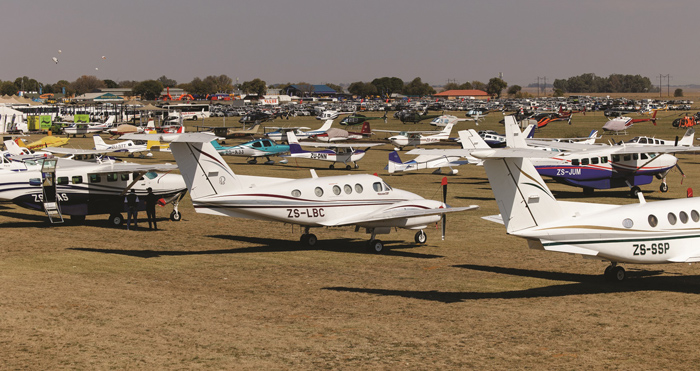
When people think about farming, they usually picture tractors, planters, pivots and harvesters. Yet across the country, aircraft in farming in South Africa are becoming a more visible, more practical and more critical part of modern agricultural life. From crop spraying and farm security to fire response and livestock management, aviation is steadily moving from the edges of agriculture to the centre of it.
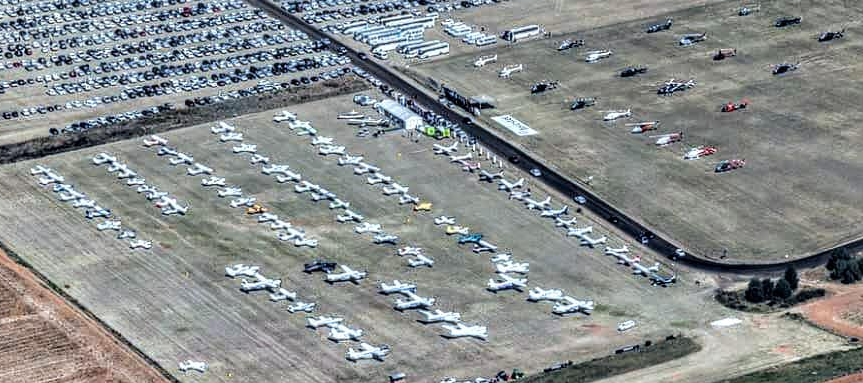
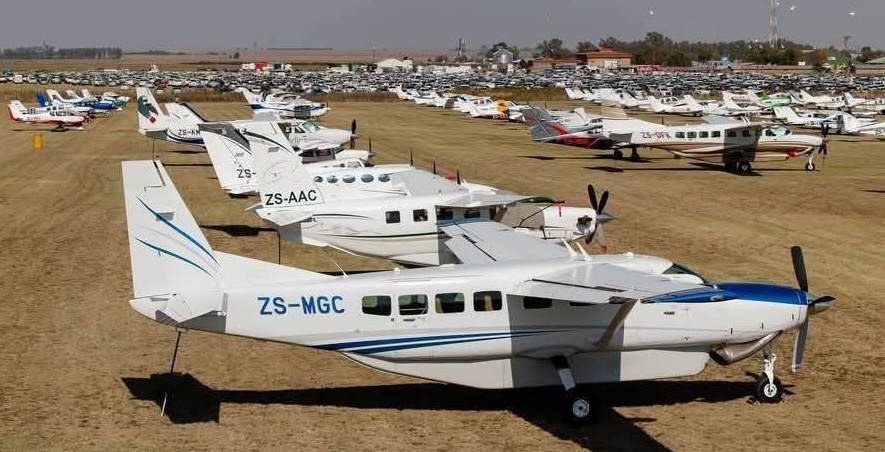
This shift becomes clear whenever large farming gatherings take place at Bothaville or Bredasdorp. At Bothaville, the sheer arrival of aircraft has become one of the most striking signs of how farming is changing. Grain SA reported that air traffic at NAMPO 2025 totalled 377 aeroplanes and 69 helicopters. That number is not important because it creates spectacle. It matters because it points to a vital reality: South African farmers are showing serious interest in aircraft because aircraft increasingly solve real farming problems.
Why Aircraft became Critical to Modern Farmers
Farming in South Africa operates under pressure. Distances are long, weather windows are short, criminal threats are real and the cost of delay is often severe. In this environment, speed is critical. So does visibility. So does the ability to move quickly between fields, camps, facilities and meetings without losing half a day on the road.
That is why aircraft in farming in South Africa are attracting serious attention from producers who need faster decisions and faster action. Grain SA itself noted that aviation traffic at Bothaville was predominantly business-related, which underlines how critical aviation has become to the business rhythm of agriculture rather than to image or prestige.
For many farmers, a light aircraft shortens travel time between units, suppliers, meetings and production areas. For others, a helicopter provides critical access over rough terrain, isolated camps or large grazing properties where vehicles are slower and less efficient. In both cases, aviation reduces delay, and in agriculture that can be critical to productivity, response and profit.
Helicopters and Farm Security
Farm security is one of the strongest reasons for growing interest in aviation. Across many rural areas, farmers face ongoing concerns around stock theft, trespassing, fence breaches and unauthorised movement on large properties. Ground patrols remain important, but on extensive farms they are often slow, reactive and limited by terrain.
Helicopters are becoming a critical layer in farm security because they give farmers an aerial advantage. From above, pilots and security teams can scan fence lines, isolated camps, access routes and remote water points far faster than any vehicle can. They can identify movement, locate problem areas and respond while time still matters.
That aerial view is a critical operational advantage. It allows a farmer to understand what is happening across a property in real time instead of relying only on delayed reports from the ground. In areas with rough terrain, dense vegetation or very large boundaries, that perspective becomes even more vital. It does not replace physical security systems, workers or organised patrols, but it strengthens them in a way that few other tools can.
Crop Spraying and Precision from the Air
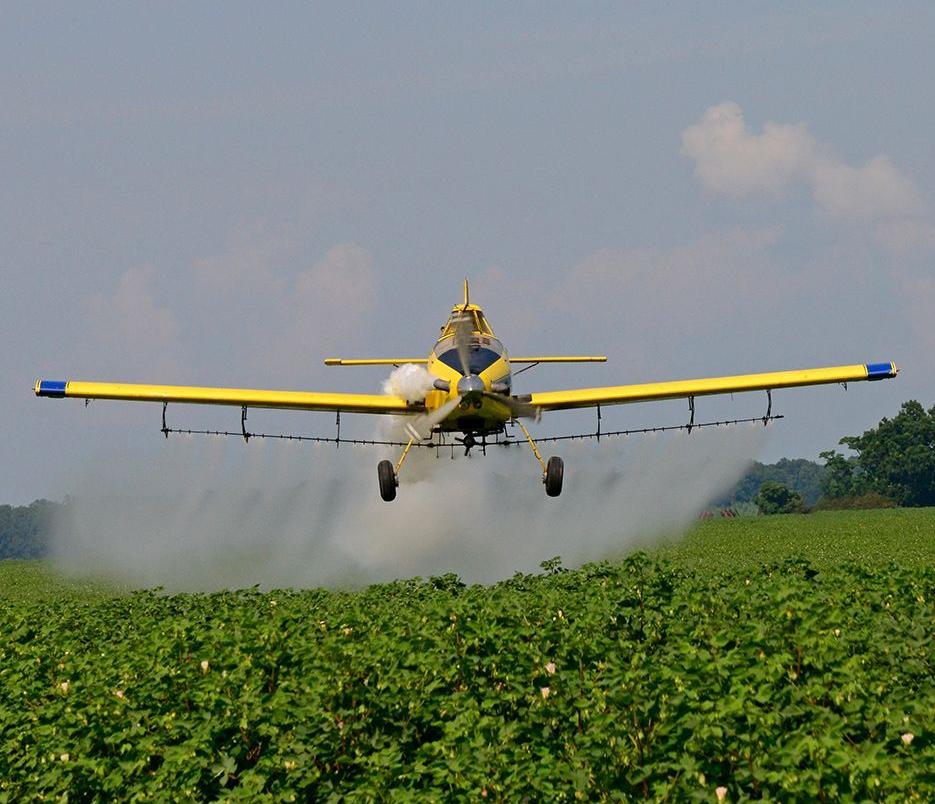
Aerial application remains one of the most critical uses of aircraft in agriculture. Crop spraying from the air has long been part of serious farming operations, and for good reason. There are moments in the season when the window for action is narrow and the crop cannot wait.
Timing is critical in crop protection. If disease pressure rises, if pests move quickly, or if weather closes in, an aircraft can often complete work in hours that ground rigs may take days to finish. That speed matters especially on large farming units where hectares must be covered fast and efficiently.
Aircraft also offer a vital advantage when ground conditions are poor. Wet fields, tall crops or fragile stages of growth can make tractor-based spraying difficult or damaging. By working from above, helicopters and fixed-wing spray aircraft reduce physical pressure on the crop while still allowing the farmer to act when necessary.
There is also a precision element that remains vital. Modern aerial application is not merely about covering land quickly. It is about applying products correctly, safely and at the right time. South Africa’s regulatory environment reflects that seriousness. Aerial spraying is specialised work, and the standards around it show how vital it has become within commercial agriculture.
Livestock, Game and Hard-to-Reach Terrain
Helicopters also serve a vital function in livestock and game operations. On properties with difficult terrain, steep slopes, bush cover or remote camps, the ability to move quickly over the land can change the way an operation is managed.
Farmers and landowners use helicopters to inspect distant areas, monitor animal movement and respond to issues without losing hours navigating rough ground. In wildlife and game-based agriculture, helicopters have become especially useful for locating, guiding and managing animals under conditions where vehicles or horses are less effective.
In these settings, the ability to react quickly is vital. A lost animal, broken fence, injured worker or suspicious movement in a remote area cannot always wait for a long drive across the farm. Aircraft shorten that response time and give the operator a better understanding of the full property, not just the parts that are easiest to reach.
Firefighting and Emergency Response
Fire remains one of the greatest threats to agriculture in many parts of South Africa. When veldfires move fast, aviation plays a vital role in protecting productive land, grazing, infrastructure and even neighbouring communities.
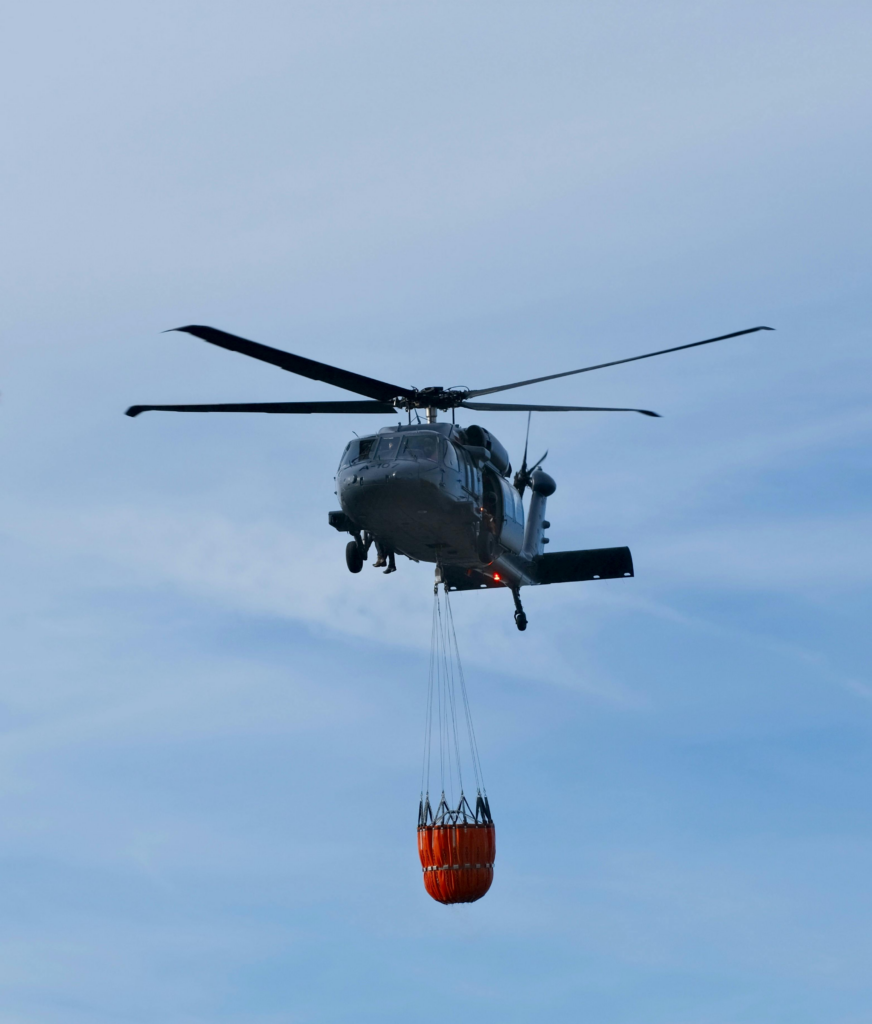
Early detection is vital in any fire response. Spotter aircraft can identify the movement and behaviour of a fire, while helicopters can support firefighting teams from the air and help contain spread in areas where vehicles struggle to reach. In rough country or high-risk fire conditions, that support becomes decisive.
For farmers, this is not theoretical. Aircraft provide vital support during the moments when speed, coordination and access matter most. In agriculture, fire can wipe out months of work in a matter of hours. That is why aviation is increasingly seen not only as a productivity tool, but also as a form of operational resilience.
What Bothaville and Bredasdorp Tell Us
The aircraft gatherings at Bothaville and Bredasdorp are important because they reflect something bigger than the events themselves. They have become a vital symbol of a broader shift in South African agriculture. Farmers are no longer looking at aircraft as distant or exclusive machines. More and more, they are seeing them as practical tools that fit naturally into serious farming operations.
At Bothaville, the sight of 377 aeroplanes and 69 helicopters in one agricultural setting showed just how vital aviation has become to the farming conversation. At Bredasdorp, the same fascination is evident whenever aircraft draw farmers’ eyes skyward. These moments capture public attention, but they also reveal what is already happening quietly on farms across the country.
Aircraft are being discussed not because they are glamorous, but because they are useful. They help farmers move faster, see further, protect better and act sooner.
The Future of Aircraft in Farming in South Africa
The future of aircraft in farming in South Africa is likely to become even more dynamic. Traditional light aircraft and helicopters will remain important, especially where travel, aerial spraying, security and emergency response are concerned. At the same time, drones and other aerial technologies will continue reshaping how producers monitor crops, assess fields and strengthen decision-making.
What will keep aviation relevant is not novelty. It is necessity. The next phase of farming will demand tighter timing, sharper oversight and stronger risk management. That will make aviation even more vital to the farms and agri-businesses that want to stay efficient, protected and competitive.
From crop spraying and livestock oversight to security patrols and firefighting, aircraft now occupy a vital place in the agricultural landscape. The more farmers look upward, the clearer that reality becomes. In South Africa today, aircraft are no longer only part of the view above the farm. They are becoming a vital part of how the farm itself is run.
FAQ sections
1. What are aircraft used for in farming in South Africa?
Aircraft are used for crop spraying, aerial observation, fast movement between farming units, fire response, security patrols and precision monitoring. The critical advantage is speed: aircraft can cover distance and gather visibility faster than most ground-based systems.
2. Why do South African farmers use helicopters?
Helicopters are useful because they can hover, land in tighter areas and work effectively over rough terrain. That makes them critical for security, livestock work, emergency response and targeted aerial support on large or hard-to-reach farms.
3. Are planes still used for crop spraying in South Africa?
Yes. Fixed-wing agricultural aircraft remain a critical tool for aerial application, especially where fields are large and timing is tight. Aerial application can be preferred when flooding, crop stage or field conditions make terrestrial application impractical.
4. Is aerial crop spraying legal in South Africa?
Yes, but it is tightly regulated. Farmers should look towards the Civil Aviation Act, the agricultural-remedies framework and SANS 10118, making compliance critical for both operators and producers.
5. Are drones legal for farming in South Africa?
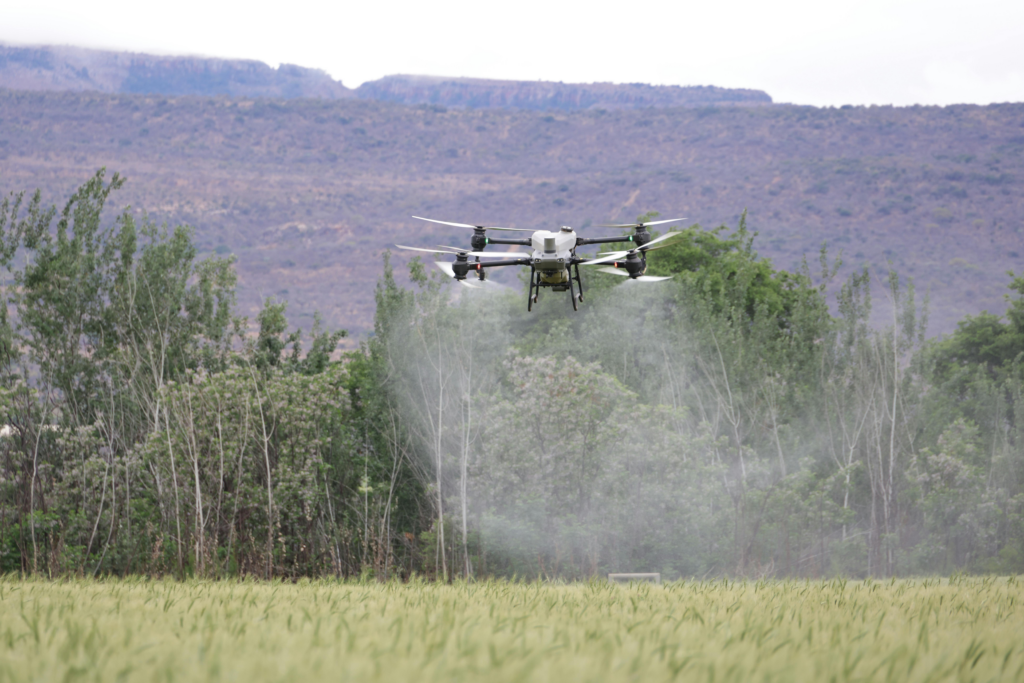
They are legal in the right framework. SACAA regulates unmanned aircraft systems under Part 101, drone-based aerial application is only recognised when the operator, aircraft and agricultural remedies meet the legal requirements. Compliance is critical here.
6. How do aircraft help with farm security?
Aircraft help security by giving farmers rapid visibility over large properties. That is critical where stock theft, trespassing or fence breaches must be detected early. A helicopter or aerial platform can cover far more ground in minutes than a vehicle can.
7. What is the difference between helicopters and drones on farms?
Helicopters are best where farmers need crewed mobility, real-time observation and broader operational reach. Drones are best where detailed imaging, mapping and highly targeted inspection are critical. Many modern operations will use both rather than choose one.
Aircraft vs helicopters vs drones in farming
| Farming task | Best fit | Why |
|---|
| Broad-acre crop spraying | Fixed-wing aircraft | Fastest coverage over large hectares |
| Security patrol over large farm | Helicopter | Quick repositioning and low-altitude flexibility |
| Greenhouse or horticulture monitoring | Drone | Detailed imagery and targeted inspection |
| Fire spotting and support | Helicopter or spotter aircraft | Rapid response and visibility |
| Inspecting inaccessible terrain | Helicopter or drone | Avoids slow vehicle access |
8. Do aircraft help during veldfires on farms?
Yes. Fire aviation resources use helicopters, tanker aircraft and command-and-control aircraft to support firefighting. In fast-moving veldfire conditions, that support can be critical to protecting land, livestock, crops and infrastructure.
9. Do smaller farms benefit from aircraft too?
They can, especially through contractors and service providers. A farm does not need to own an aircraft for aviation to be critical. Many producers benefit through outsourced crop spraying, drone scouting, fire support or specialised inspection work when needed.
10. Why do so many aircraft gather at Bothaville and Bredasdorp?
Because those gatherings reflect a wider farming reality. Grain SA’s Bothaville numbers show how strongly aviation is tied to agri-business mobility and decision-making, while Bredasdorp’s helicopter activity makes the same aviation interest visible in the Cape context. The gatherings are a public sign of a critical private trend on farms.
(M.O)