Hydroponics has moved well past the novelty stage. For a growing number of producers in southern Africa, soilless growing is now a serious, proven commercial option. It delivers more consistent quality, better use of water and fertiliser, and far higher yields per square metre than conventional open-field production. The real question for most farmers is no longer whether to grow hydroponically, but which system suits their crop, site, budget and level of experience.
At Greener Solutions, we have spent decades answering that question. We are hydroponic specialists, and we design and install a wide range of proven systems because no single system is right for every grower.
One size does not fit all: proven hydroponic system options
A hydroponic system is a production tool, and the right one depends on what you grow and where you grow it.
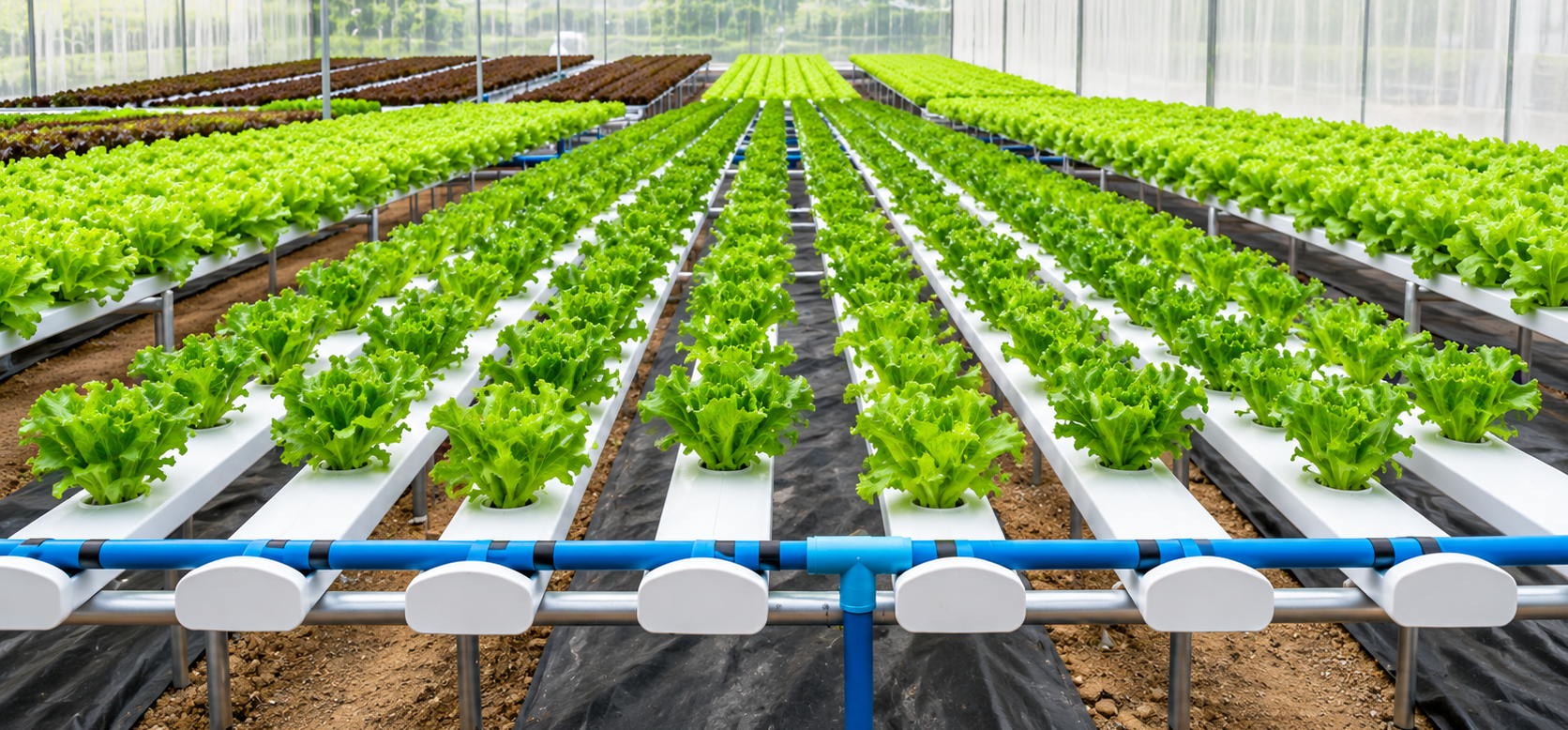
NFT (Nutrient Film Technique) circulates a thin film of nutrient solution through channels, with plant roots in constant contact. It is a well-established, proven choice for lettuce and herbs, and it is highly efficient with water and nutrients.
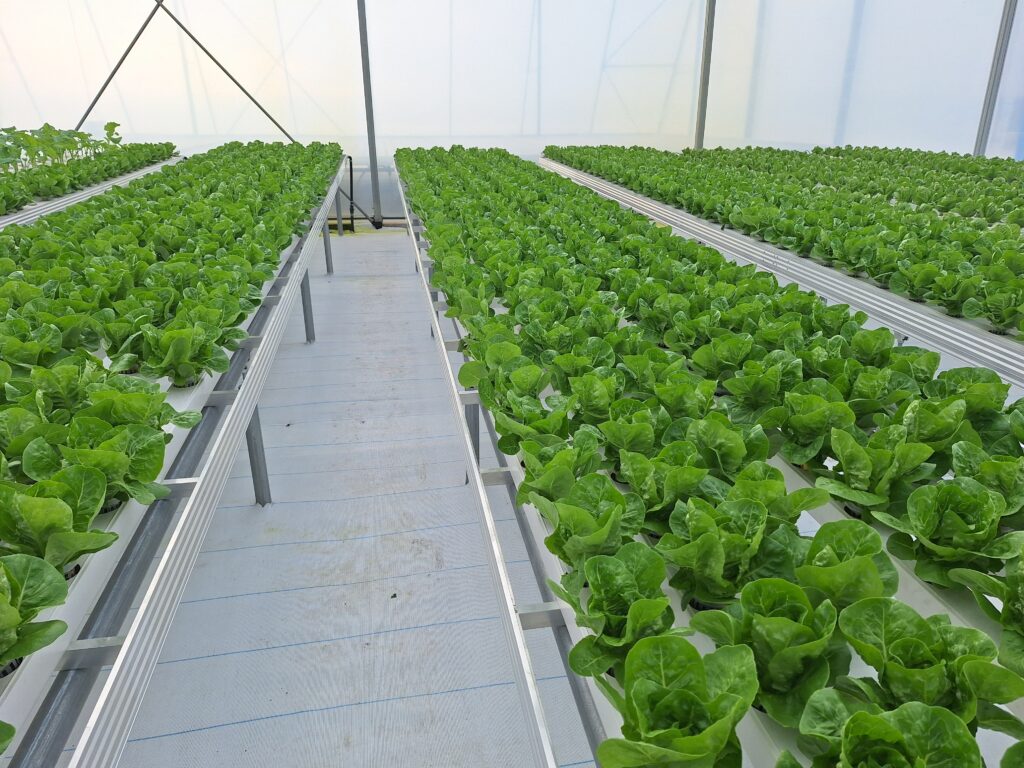
NGS systems are another popular, proven gutter-based option for leafy crops, offering excellent control over feeding and consistent crop timing.
Rolling bench systems are a proven way to make the most of greenhouse space. Benches move so that the working aisle can be created wherever it is needed, which suits high-value crops and intensive production.
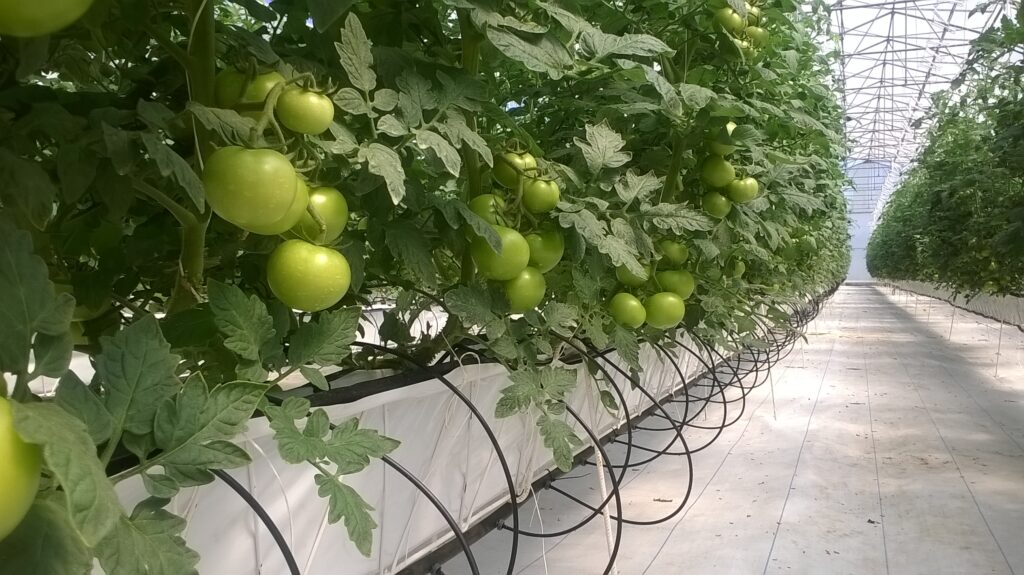
Substrate drip systems grow in bags, slabs or containers filled with a medium such as coco or perlite, and are the proven standard for fruiting crops such as tomatoes, cucumbers, peppers and berries.
Floating raft systems suspend plants on rafts over a nutrient solution. They are another proven way to produce leafy greens at scale.
We work with an excellent range of technology suppliers in each of these fields, which means we can specify proven equipment, irrigation controllers, fertigation units and structures matched to your operation rather than forcing your operation to fit a product.
Every one of these systems has strengths. Most of the naked-root systems, however, share one vulnerability that matters a great deal in Africa: they depend on continuous, reliable power.
The African problem: when the power goes off
Anyone farming in South Africa and across the continent knows the pattern. Power supply is unpredictable. Pumps stop, controllers go down, and a breakdown at the wrong moment can be costly. In a system where roots sit bare in a flowing nutrient solution, an interruption of even a few hours in hot conditions can put an entire crop at risk. Systems such as NFT, NGS and aeroponics were designed in environments where stable infrastructure was a given. Here, it is a risk that has to be managed.
This is the gap we set out to close, and it is why, many years ago, our design team developed a proven system of our own: the Greener System.
The Greener System: designed here, proven here
The Greener System is a proven, fully recirculating hydroponic system developed for local conditions and in use for nearly 30 years. It draws on our design team’s experience of growing in African conditions, and many customers in South Africa have used it with great success.
Its key difference is the rooting medium. Instead of bare roots in a film of water, plants grow in a special inert sand, chosen for optimum drainage and root development. The sand is fed by a pressure-compensated drip system, with irrigation applied in cycles rather than continuously, which saves on pumping costs.
Water that drains through the beds is captured in a trough, topped up with nutrients (manually or through a fertigation unit) and recycled back to the crop. The result is zero waste discharge on a day-to-day basis. Because doses are accurate and the water is fully recycled, the proven system is highly water efficient, and all fertiliser is used with nothing wasted. Low pumping requirements make it energy efficient as well.
Proven robustness: the deciding factor
The most important feature of the Greener System is its resilience. Because the sand holds water and nutrients around the roots, plants keep drawing on that reserve during a power failure or breakdown. They are not affected for quite long periods while the problem is rectified. For a grower in an unpredictable farming environment, that proven buffer is a major risk reduction, and it is the very thing that sets the system apart from other naked-root recirculating systems.
Proven production that holds its own
Robustness does not come at the expense of output. Plant density runs from 10 to 15 plants per square metre, depending on the crop, and growing cycles for lettuce and leafy greens such as herbs match those of the most sophisticated naked-root systems, without the risks.
Up to 15 cycles of frilly and butter lettuce per year is the norm.
In some crops and situations, harvest comes three weeks after transplant, allowing 17 cycles per year.
Spinach (swiss chard) can produce up to 250 tons per hectare, or 25 kg per square metre, per year.
The system is best suited to leafy crops: lettuce varieties, herbs, spinach and similar crops.
Flexible layout, simple to run
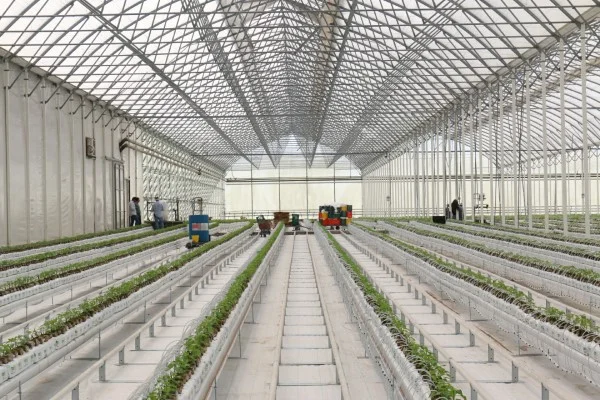
Growbeds are laid out to make the best use of the production area, whether that is a tunnel, a multispan greenhouse or a shadehouse, allowing enough space for the crop’s growth habit and for cultivation work. Beds are typically 1.32 m wide, depending on the crop, so that plants in the centre are within easy reach. Aisles are around 600 mm wide and covered with gravel for easy access with equipment.
The proven system is also easy to understand. Beginners can operate it with our initial technical growing support, and it can be designed for almost any scale, from a small-scale start-up to a full professional operation. Because it does not depend on a fully enclosed, high-tech structure, it works in shadehouses and can even be used in open field, which opens hydroponics to growers who cannot justify the cost of a high-spec greenhouse.
Commercial proof
A system is only as good as the businesses it supports. The Greener System has proven itself as a full commercial system used over many years by large professional growers supplying Woolworths, Checkers and Spar. Our largest growers run installations of up to 3 hectares (30 000 m²), producing around five million heads of lettuce per year, and they run them profitably.
Part of that proven profitability is the low capital outlay. Capex is modest compared with high-tech systems, which keeps both capital and production costs favourable and supports a better return on investment than almost all other systems.
Choosing the right system for you
We would not claim that the Greener System is right for every grower or every crop. If you are producing tomatoes or cucumbers, a substrate drip system is the sensible choice. If you want maximum density and speed from leafy greens in a well-serviced, high-tech environment, NFT or NGS may fit your plan. Where you want leafy greens, an easy learning curve, low capital cost, resilience to power failures and the freedom to scale up or down, the proven Greener System is hard to beat.
That is the value of working with a specialist who is not tied to one technology. We can compare options with you honestly, based on your crop, site, power situation, market and budget, and then design, supply and install the system that suits them.
Talk to us
Whether you are a first-time grower weighing up your options or an established producer looking to expand or improve an existing operation, our team can help with system design, installation and the technical growing support to get you off to a good start.
Greener Solutions cc
Phone: +27 43 732 1023
Mobile: +27 82 417 5587
Website: https://www.greenersolutions.co.za